



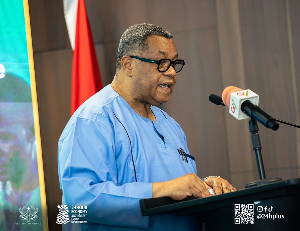
 Presidential Advisor on the 24-Hour Economy Programme, Augustus Goosie Tanoh
The 24-Hour Economy and Accelerated Export Development Programme Secretariat (24H+) has begun steps to develop a new cooperative legal framework aimed at modernising Ghana’s cooperative sector and driving structural economic transformation.
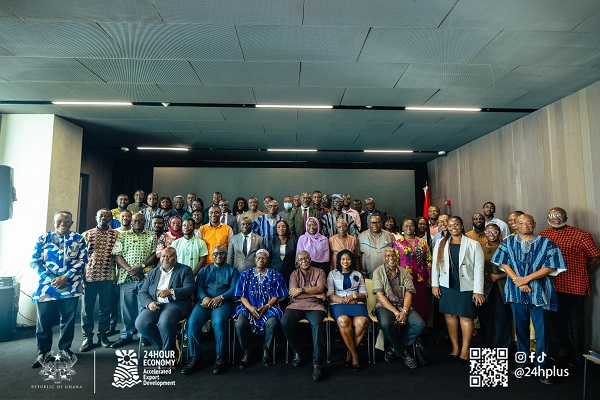
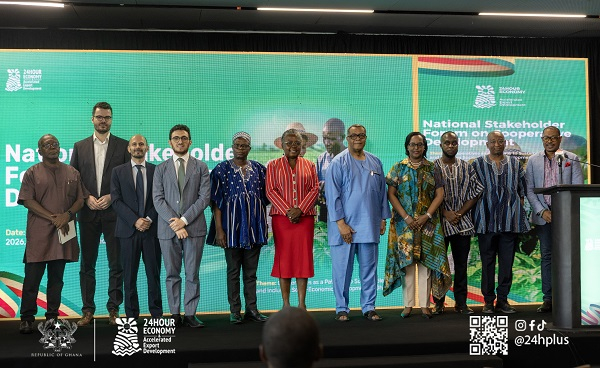
The initiative was announced at a National Stakeholder Forum on Cooperative Development in Accra, held under the theme “Cooperatives as a Pathway to Sustainable and Inclusive Socio-Economic Development in Ghana.”
As part of the process, the Secretariat has formed a joint committee to draft a Cooperative Legislation Bill for submission to Parliament. If approved, it will be assented to by President John Dramani Mahama. The proposed law is expected to replace outdated provisions and align the sector with current economic realities.
Presidential Advisor on the 24-Hour Economy Programme, Augustus Goosie Tanoh, said cooperatives remain key to national development but continue to face structural challenges.
He noted, “Cooperatives remain one of the most effective vehicles for empowering women, youth, and small businesses, but continue to face longstanding challenges, including limited access to finance, weak institutional support, and an outdated legal framework that is over 58 years old.”
He stressed the need for urgent reforms adding, “Cooperatives that cannot access capital cannot grow.”
The Secretariat said the reforms are expected to strengthen farmer participation in production, processing, and marketing value chains, while also improving access to finance and technical support.
It added that many farmers currently operate under systems where external actors control key aspects of production, limiting profitability despite increased output.
Under the new framework, cooperatives are expected to take a stronger role in owning and managing processing infrastructure, supported by improved governance systems.
The reforms will also introduce measures such as a Solidarity Fund to cushion members against market and production shocks, as well as structured market systems to improve pricing and market access.
Minister for Fisheries and Aquaculture Development, Emelia Arthur, said cooperatives can play a key role in aquaculture development and job creation, adding that government is open to partnerships with cooperative groups in selected districts.
The Chief Director of the Ministry of Labour, Jobs and Employment, Hamidu Adakruogu, reaffirmed government’s commitment to strengthening the regulatory environment and promoting cooperatives as platforms for decent job creation, especially for young people.
National Coordinator of the 24-Hour Economy Programme, Kyeretwie Opoku, expressed appreciation to stakeholders and reaffirmed the Secretariat’s commitment to driving reforms that reposition cooperatives as engines of economic transformation.
The Secretariat said the combined legal, institutional, and operational reforms are expected to shift farmers from primary producers into owners of agro-industrial enterprises, strengthening Ghana’s broader economic transformation agenda.

Copyright © 1994 - 2026 GhanaWeb. All rights reserved.










