



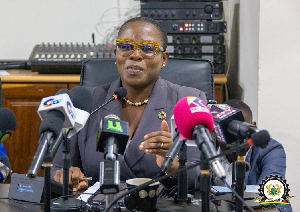
 Dr Audrey Smock Amoah, the Director-General of the National Development Planning Commission (NDPC)
Dr Audrey Smock Amoah, the Director-General of the National Development Planning Commission (NDPC), has revealed findings from a strategic stakeholder engagement conducted across Ghana’s 16 regions.
Speaking at a media briefing in Accra on Wednesday, 29 April 2026, Dr Amoah highlighted that widespread infrastructure deficits, overlapping development frameworks, and perceived inequalities in resource allocation have contributed to strong feelings of unfairness among communities.
Against this backdrop, the NDPC is spearheading the preparation of a Consolidated National Development Plan rooted in national consensus.
The Commission has therefore engaged district, municipal, and metropolitan officers, traditional leaders, and regional stakeholders to align local priorities with Ghana’s broader Resetting Ghana Agenda.
Dr Amoah identified recurring challenges such as weak agricultural value chains, youth unemployment, and climate vulnerability, while stressing the importance of integrating these issues into the five national development dimensions: economic development; social development; governance and institutional development; environmental, infrastructure and spatial development; and international relations.
She emphasised the need for stronger collaboration between local assemblies and traditional authorities, improved monitoring systems, and binding long-term frameworks to address policy discontinuity.
Reaffirming the NDPC’s mandate, she explained that district-level plans feed into the national framework, with certification contingent on addressing identified gaps.
The Commission is also revising operational guidelines to make regional and district planning processes more practical and results-oriented.
Beyond technical reforms, Dr Amoah emphasised the importance of attitudinal change in governance, underscoring the need for partnerships with civic education institutions to instil positive values from an early age.
She called on the media to amplify development messages, expose poor practices, and highlight success stories, citing the Volta Region’s cleanliness as a model worth emulating.
She noted that Ghana’s development planning must reflect both national aspirations and regional diversity, ensuring inclusive and sustainable growth for all citizens.

Copyright © 1994 - 2026 GhanaWeb. All rights reserved.










