



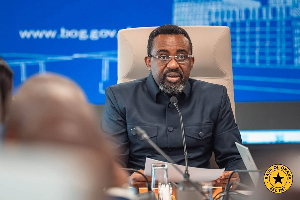
 BoG Governor, Dr Johnson Pandit Asiama
The Bank of Ghana’s Monetary Policy Committee (MPC) has begun its 131st meeting with inflation trends, liquidity conditions and global oil market pressures expected to dominate discussions on the country’s monetary policy direction.
Opening the meeting on Monday, July 20, 2026, Bank of Ghana Governor Dr Johnson Pandit Asiama said the Committee would assess whether the recent rise in inflation represents a temporary adjustment or a more persistent shift in the economic outlook.
Headline inflation increased for three consecutive months, rising from 3.2% in March to 5.3% in June, largely driven by transport and haulage costs.
Ghana secures deal to reopen egg exports, tomato imports with Burkina Faso
Although inflation remains below the Bank’s target band of 8% plus or minus 2 percentage points, Dr Asiama said the recent trend requires careful analysis.
“The prolonged disinflation phase has ended, and inflation is now returning towards the target band. Whether that return reflects orderly normalisation, or the beginning of a more persistent change in the outlook, is the central question for this meeting,” he said.
At its previous meeting, the MPC maintained the Monetary Policy Rate at 14% and replaced the dynamic Cash Reserve Ratio framework with a uniform 20% requirement to be held in domestic currency.
Dr Asiama said the Committee would evaluate the impact of those measures on liquidity conditions, monetary policy transmission and broader economic outcomes.
Another key issue before the MPC is the Bank’s decision to stop prefinancing the Ghana Gold Board’s gold purchases through its auction arrangements, effective July 1.
According to the Governor, the change represents an important shift in domestic liquidity management and will form part of the Committee’s assessment.
The MPC is also expected to consider external risks, particularly renewed volatility in global oil markets. Dr Asiama noted that Brent crude prices had risen above US$85 per barrel following renewed tensions around the Strait of Hormuz.
“For Ghana, as a commodity-exporting yet energy-importing economy, these developments reinforce the need to assess carefully the extent to which external cost pressures may influence the domestic inflation outlook,” he said.
Despite the pressures, the Governor said the domestic economy remains resilient, with GDP growth reaching 6.4% in the first quarter, while real private sector credit expanded by 34.1%.
He added that the banking sector remains sound and well-capitalised, although elevated non-performing loans continue to pose a challenge.
The MPC will also review exchange rate developments, reserve accumulation and the effectiveness of previous policy reforms before announcing its decision on the policy rate.
Dr Asiama said the Committee’s objective is to ensure that the monetary policy framework remains suitable for current economic conditions while protecting long-term credibility.
“Our task this week is not simply to assess the latest data. It is to determine whether the framework we strengthened in May remains fit for the conditions now before us,” he said.
MA

Copyright © 1994 - 2026 GhanaWeb. All rights reserved.










