



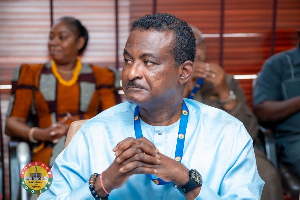
 Deputy Majority Leader and Member of Parliament for Cape Coast South, George Kweku Ricketts-Hagan
Parliament adjourned on Friday, July 31, 2026, with a strong defence of the nation’s economic trajectory, as Deputy Majority Leader and Member of Parliament for Cape Coast South, George Kweku Ricketts-Hagan, asserted that the administration’s stringent policy measures are yielding results.
Delivering the Majority’s closing address on behalf of Majority Leader Hon. Mahama Ayariga, the Cape Coast South lawmaker emphasized that the recent economic gains were far from coincidental.
Instead, Ricketts-Hagan maintained that the positive momentum stems directly from discipline, sacrifice, and the collective resolve of the Ghanaian people. Highlighting the strategy behind the recovery, he noted that lasting macroeconomic stability cannot be achieved through makeshift solutions but requires prudent leadership, responsible governance, and sound public policy.
While the Deputy Majority Leader refrained from citing specific statistical indicators during his address, he portrayed the current austerity measures as necessary interventions aimed at safeguarding long-term financial resilience.
The Majority Leader, Mahama Ayariga, also defended the 2026 Mid-Year Budget Review, insisting that the government’s economic performance must be judged on facts rather than partisan rhetoric.
Responding to criticisms from the Minority Caucus, Ayariga maintained that the Majority has a duty to present an objective assessment of national progress and would resist attempts to misrepresent key achievements.
He accused the opposition of cherry-picking figures presented by the Finance Minister, emphasizing that positive shifts in key economic indicators are the result of deliberate policy decisions rather than political spin.
Ayariga dismissed assertions that the government’s achievements had been exaggerated, maintaining that the administration’s measures have stabilized the economy and laid the foundation for sustainable growth.
Addressing concerns over public expenditure, Ayariga acknowledged delays in payments to contractors across several sectors. However, he argued that prudent expenditure management should not be interpreted as a sign of economic decline, stressing that fiscal discipline remains essential to safeguarding macroeconomic stability.
He urged that fiscal and debt management strategies be assessed within the broader context of ongoing economic reforms rather than through isolated statistics.
While acknowledging the challenges that remain, Ayariga concluded that the review demonstrates steady progress toward economic recovery and called on Parliament to base its judgment on evidence.

Copyright © 1994 - 2026 GhanaWeb. All rights reserved.










