



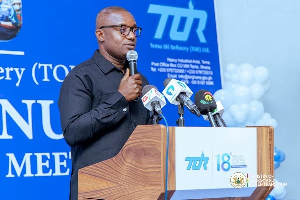
 Dr John Abdulai Jinapor is the Minister of Energy and Green Transition
The government has saved about $500 million through a shift to gas-fired power generation and the renegotiation of agreements with Independent Power Producers (IPPs), Minister for Energy and Green Transition, Dr John Abdulai Jinapor, has disclosed.
According to the Minister, the savings form part of broader measures being implemented to reduce the cost of power generation and improve the financial sustainability of Ghana’s energy sector.
Speaking at the commissioning of the new headquarters of the Public Utilities Regulatory Commission (PURC) on Thursday, August 20, 2026, Dr Jinapor said government had also cleared about $1.47 billion in legacy energy debt since assuming office.
“We have so far cleared about $1.47 billion in legacy debt alone,” he said.
Dr Jinapor said one of the major sources of savings had been the government’s decision to reduce reliance on expensive liquid fuels for power generation and increase the use of natural gas.
He said the move had reduced the country’s dependence on imported liquid fuels while saving significant foreign exchange.
He explained that the savings formed part of efforts to lower the cost of electricity generation and improve the financial position of the energy sector.
The Minister also disclosed that government had renegotiated agreements with IPPs in collaboration with PURC, resulting in additional savings.
“We’ve also renegotiated with the IPPs, working with PURC, and we’ve saved about $250 million again from debt,” he said.
Dr Jinapor said reforms to the energy sector’s cash waterfall mechanism had also significantly improved payments to power producers.
He said monthly declarations into the mechanism had increased from about GH¢6 billion to nearly GH¢15 billion.
He added that while IPPs previously received about 42% of their invoices, most were now receiving close to full payment.
The Minister said the improved payment system was helping to prevent the accumulation of new arrears.
He noted that outstanding energy-sector debt stood at about GH¢80 billion when the government assumed office.
Dr Jinapor said the reforms represented significant progress towards stabilising the energy sector but stressed the need for stronger regulation to sustain the gains.
“Clearly, we are making significant progress. But I would urge you to strengthen the regulation of your sector,” he said.
He said government would continue implementing measures aimed at reducing the financial burden on the sector, improving efficiency and ensuring a more sustainable power supply.
ANAS/MA

Copyright © 1994 - 2026 GhanaWeb. All rights reserved.










