



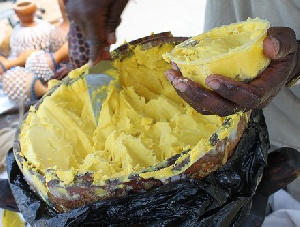
 File photo of shea butter
Ghana is losing millions of cedis in potential revenue as the majority of its shea nuts are exported in raw form rather than being processed locally into shea butter and other value‑added products.
The Ghana Shea Butter Employers Association estimates that about 70% of the country’s shea nuts are exported, leaving local processors with limited supplies and reducing opportunities to create jobs and boost earnings from the industry.
President of the Ghana Shea Butter Employers Association, Rabiatu Abubakari said local processors also face challenges accessing affordable financing.
“We are losing millions of cedis because our shea nuts are being exported in their raw form instead of being processed here in Ghana,” she said.
High interest rates and limited loan approvals make it difficult for businesses to expand operations.
“When we go to the banks for loans, most of the time we are declined, and even when the loans are available, the interest rates are too high for us to sustain the business,” she added.
She further urged government to curb raw exports and support domestic processing under the 24‑hour economy initiative, stressing the need for more storage facilities to manage the seasonal nature of shea nuts.
Improved storage, it said, would allow processors to maintain year‑round production.
GRIDCo reports second nationwide grid failure in three weeks
While the Tree Crops Development Authority has provided farm inputs to support the sector, the association insists that more targeted interventions are required.
The association is calling for affordable financing, expanded storage infrastructure, and stronger support for local processing to help Ghana maximise revenue and job creation from the shea industry.
DR/SA
#TrendingGH: 'We have used it for years' - Traders speak on Ethemax use

Copyright © 1994 - 2026 GhanaWeb. All rights reserved.










