



 The development was disclosed by Petroleum Commission Chief Executive Officer, Emeafa Hardcastle
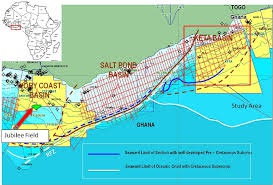
Ghana has approved Brazilian state-owned oil giant Petrobras’ application to begin negotiations for exploration contracts covering four offshore blocks in the underexplored Keta Basin.
The development was disclosed by Petroleum Commission Chief Executive Officer, Emeafa Hardcastle, who said the move forms part of Ghana’s efforts to attract fresh investment into the upstream petroleum sector.
According to her, Petrobras has been given the green light to engage the government on the terms of exploration agreements for the four blocks located along Ghana’s eastern Atlantic margin.
On Friday, August 21, 2026, Petrobras subsequently confirmed that it had submitted an expression of interest in the blocks and commenced negotiations with the Ghanaian authorities.
In a securities filing, the company said the move is part of its strategy to replenish its oil and gas reserves through exploration in new frontier areas both in Brazil and internationally.
$2bn Jubilee investment to boost Ghana's oil and gas output - Petroleum Commission
“The move is aligned with Petrobras’ strategy of replenishing oil and gas reserves through exploration in new frontier areas in Brazil and abroad,” the company said.
Petrobras added that it is evaluating opportunities to diversify its exploration portfolio while supporting the company’s long-term growth.
The development could mark Petrobras’ entry into Ghana’s upstream oil and gas industry and strengthen the country’s efforts to attract major international oil companies into frontier exploration.
The Keta Basin remains one of Ghana’s least-explored offshore areas. Only about six wells have been drilled in the basin since the 1970s, with the last deepwater well drilled in 2003. No commercial discovery has been made in the basin to date.
However, previous drilling activities recorded hydrocarbon shows, while geological similarities between the Keta Basin and proven petroleum systems in the Gulf of Guinea and Brazil’s Equatorial Margin have renewed interest in the area.
Ghana is now promoting the basin as part of efforts to attract new exploration investment and increase oil and gas production following a significant decline in national crude oil output from its 2019 peak.
The country is also undertaking seismic studies to improve understanding of the basin’s hydrocarbon potential and support plans to auction additional offshore blocks.
A major TGS 2D-cubed seismic project covering the Keta Basin is expected to provide additional geological data, with completion targeted for early 2027.
If the negotiations with Ghana are successfully concluded, Petrobras would establish a new foothold in the country’s upstream sector and potentially bring significant technical and financial capacity to the exploration of the Keta Basin.
However, details including the specific block names, equity interests, exploration work commitments and investment levels have not yet been disclosed.
The potential agreements will depend on the successful conclusion of negotiations between Petrobras and the Ghanaian authorities.
With additional files from offshore-mag.com and Reuters
MA

Copyright © 1994 - 2026 GhanaWeb. All rights reserved.










