



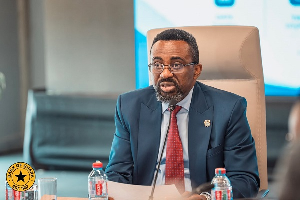
 BoG Governor, Dr Johnson Pandit Asiama
The Governor of the Bank of Ghana (BoG), Dr Johnson Pandit Asiama, says all 23 banks operating in Ghana are now fully capitalised, signalling further strengthening of the country’s banking sector.
Bank capitalisation refers to the financial capital a bank has available to absorb losses and remain financially stable.
Dr Asiama said the banking sector had become more robust and resilient, with banks maintaining sound capital and liquidity positions.
Ghana, Petrobras begin talks over four offshore blocks in Keta Basin
He attributed the improvement partly to better asset quality, which he said was helping to strengthen banks’ balance sheets.
“The banking sector is also robust and resilient, with all banks now well capitalised. All 23 banks are now fully capitalised. Capital and liquidity positions remain sound, while the improvement in asset quality provides a stronger balance sheet,” he said.
He made the remarks at the 2026 CEOs Connect, organised by the Canada-Ghana Chamber of Commerce.
Dr Asiama said the development formed part of Ghana’s broader progress in restoring macroeconomic stability over the past two years.
However, he stressed that the gains made in stabilising the economy must now translate into increased productive investment, stronger private sector growth, higher exports and the creation of quality jobs.
Dr Asiama also urged banks to deepen their participation in Ghana’s capital market to improve access to long-term financing for businesses.
He said greater participation by banks in the capital market could broaden their access to long-term funding while strengthening transparency and corporate governance.
According to him, a deeper financial system would also provide businesses with a wider range of financing options to support expansion and long-term growth.
He encouraged banks and businesses to explore diverse sources of financing, including long-term debt and equity, trade finance, syndicated lending, private equity, leasing, export finance, development finance, and green and sustainability-linked financing.
Dr Asiama said these financing options were particularly important for businesses seeking to expand their operations beyond Ghana and compete effectively in international markets.
He stressed that the next phase of Ghana’s economic recovery should focus not only on maintaining macroeconomic stability but also on ensuring that businesses have access to the capital needed to expand, create quality jobs and drive sustainable economic growth.
MA

Copyright © 1994 - 2026 GhanaWeb. All rights reserved.










