



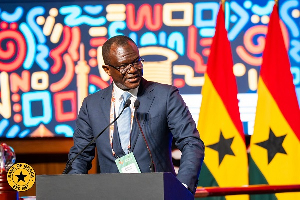
 Dr Zakari Mumuni is the First Deputy Governor of the BoG
The First Deputy Governor of the Bank of Ghana (BoG), Dr Zakari Mumuni, has underscored the need for Ghana to improve the quality and use of data to drive better policymaking and national development.
He explained that the challenge for policymakers today is not the absence of data, but the ability to transform the vast amounts of information available into actionable insights.
“The greatest challenge facing policymakers today is no longer a shortage of data. It is turning an abundance of data into timely, reliable and actionable intelligence,” Dr Mumuni said.
According to him, strengthening data systems and ensuring effective analysis will be critical for shaping stronger economic and social policies that can respond to Ghana’s evolving needs.
Mahama signs 10 bills into law to transform economy, empower citizens
Speaking at the 4th Annual Statistics and Data Science Conference of the Ghana Statistical Association in Tamale on Wednesday, August 26, 2026, Dr Zakari Mumuni, stressed that human judgment remains essential in decision‑making.
“Data itself does not make policy. A forecast does not make policy. An algorithm does not make policy. People make policy,” he stated.
Dr Mumuni explained that good data depends on proper collection, quality, and relevance, warning that advanced technology can still produce misleading results if poor information is used.
“In the age of AI, bad data in means very sophisticated garbage out,” he cautioned.
He noted that the Bank of Ghana is leveraging technology, artificial intelligence, and big data to improve its understanding of inflation, economic activity, and financial sector risks.
“Technology matters when it closes the gap between when something happens and when a policymaker knows about it,” he said.
However, he stressed that technology and AI should support human decision‑making, not replace it.
“Technology can strengthen our intelligence, but it does not remove the need for human judgment,” he added.
Dr Mumuni also called for stronger collaboration among statisticians, economists, data scientists, technologists, and policymakers, as well as closer partnerships between universities and public institutions.
“Research achieves its greatest value when it moves beyond publication—into practice, into policy, and into impact,” he said.
He urged stakeholders to invest in data quality, embrace high‑frequency and alternative data while maintaining proper statistical standards, and strengthen the link between research and policymaking.
“Our task is to turn that abundance into understanding and understanding into action. Better data. Better decisions. Better outcomes,” he concluded.
ANAS/SA
Noise Maker, Palm Wine Bar Talk, Prison in His Brain: Sammy Gyamfi tears into Afenyo-Markin

Copyright © 1994 - 2026 GhanaWeb. All rights reserved.










