



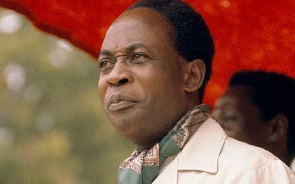
 Osagyefo Dr Kwame Nkrumah was Ghana's first president
Ghana’s first President, the late Osagyefo Dr Kwame Nkrumah, introduced a seven-year development plan covering 1963 to 1970, with the goal of transforming key sectors of the economy and laying the foundation for long-term development.
The plan was built around six key areas: state-led industrialisation, economic diversification, agricultural modernisation, infrastructure development, human capital development and an African economic purpose.
Adopt Nkrumah's vision as a blueprint for national development – Armah-Kofi Buah
It covered major sectors including education, energy, industry and mining, agriculture, employment, health, housing and infrastructure.
Nkrumah’s vision went beyond building factories and roads. The plan sought to create a society where Ghanaians would have access to basic necessities such as employment, food, shelter and education.
It also aimed to tackle poverty, illiteracy and disease while expanding educational opportunities for children.
Agriculture and industry were placed at the centre of the plan’s economic strategy. It argued that Ghana first had to create wealth through productive investment before achieving its wider social goals.
The plan therefore focused on improving agriculture and expanding industries across the country. It also linked economic growth to employment, with the aim of creating productive jobs for Ghanaians who were willing and able to work.
Under the development plan, the State was expected to play a major role in driving economic transformation, particularly through investment in agriculture and industry. At the same time, the plan recognised the role of private enterprise within Ghana’s mixed economy.
Mahama capable of implementing Nkrumah’s 7 year Dev. Plan – Youth group
The plan also called for major investment in social services and basic infrastructure, including transport and communications, electricity and water supply, as well as training the manpower needed to run the economy.
Another major part of the vision was to strengthen Ghana’s economic independence. The plan proposed directing investment in agriculture and industry towards strategic areas of production while using the resulting economic strength to support Ghana’s participation in efforts towards African economic unity.
Read the full document below
MAG/MA
Why Is Flying Within Ghana So Expensive? AWA Founder Explains

Copyright © 1994 - 2026 GhanaWeb. All rights reserved.










