


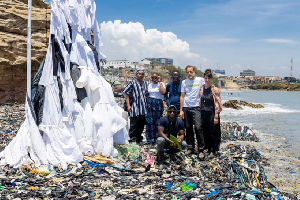
 Discarded textiles from top global fashion brands meet other waste materials at the Jamestown Beach
The fashion brands were identified in a brands audit of 201 discarded garments collected from the Jamestown Beach, Kantamanto Market and Agbogbloshie Market (all in Accra) between October 2 and 5 this year by Greenpeace Africa, which revealed that garments from these top global fashion brands make up a significant amount of the textile waste at beaches, markets and dump sites across the capital.
Greenpeace, a pro-environment-focused nonprofit working on environmental sustainability and conservation across various African countries has intensified their call on government to ban the importation of what they described as “dead waste” - secondhand textiles that cannot be reused nor repurposed or resold into Ghana.
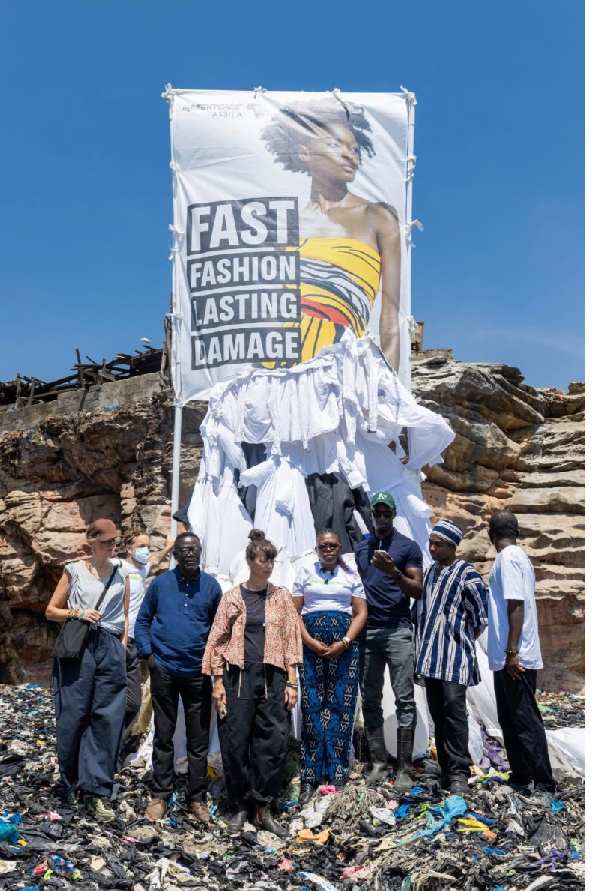
To drum home their point, they unveiled a six-metre installation, dubbed: "Fast Fashion, Lasting Damage", created from discarded garments by The Revival, an upcycling collective based at Kantamanto Market.
The installation depicts a model wearing a dress whose large skirt, made from hundreds of discarded garments, extends onto the ground and merges with other waste materials including discarded garments, aimed at drawing the attention of all stakeholders to the growing volume of textile waste entering Ghana.
Project Lead for the Pan African Plastics Project at Greenpeace Africa, Hellen Kahaso Dena, said the organisation was concerned about the volume of unusable clothing entering Ghana through the second-hand clothing trade and revealed that discussions with traders at Kantamanto indicated that a significant proportion of the clothing arriving at the market was unsuitable for reuse or resale with with traders estimating that about 40 per cent of the clothing entering the market was waste.
Dena clarified however that Greenpeace was not advocating for a complete ban on second-hand clothing because of the importance of the trade to livelihoods.
However, “What we do not want is for fashion brands in the global north to actually use that loophole to continue dumping,” she stated.
She called on government to ban the importation of such textiles into the country describing them as “dead waste” as they cannot be reused, repurposed or resold.
Head of Investigations at Greenpeace Africa, Sam Quashie-Idun, disclosed that the audit formed part of broader investigations into the environmental consequences of discarded clothing in Ghana.
He said the volume of discarded clothing also raised concerns about plastic and microplastic pollution because many garments were made from synthetic fibres and cited a 2024 Greenpeace report titled: “Fast Fashion, Slow Poison”, which found 89 per cent of 164 discarded garments tested at three dumpsites in the Greater Accra Region contained synthetic fibres.
For her part, Isabelle McAllister, a a Sweden-based Greenpeace spokesperson insisted that fashion companies be made to retain responsibility for their products even after the garments leave their original markets.
She also called for stronger Extended Producer Responsibility (EPR) regulations requiring fashion companies to contribute towards managing the environmental impact of their products throughout their life cycle.
She added her voice in clarifying that Greenpeace was not calling for a total ban on second-hand clothing imports in Ghana, as the trade remained important to Ghana’s economy.
“We don’t want to see a total ban on import here. The quality needs to be better and we have to stop the overproduction,” she stated.
She also urged fashion companies to reduce production volumes and improve the quality of garments entering the second-hand market.
As part of the campaign, Greenpeace presented a petition which signed by more than 25,000 people calling for a ban on unusable textile waste and greater responsibility from fashion companies for waste associated with their products to the Ministry of Trade, Agribusiness and Industry.
Officials of Greenpeace Africa mounted a 6-metre installation at the Jamestown Beach in an attempt to draw attention to the growing volume of textile waste entering Ghana.

Copyright © 1994 - 2026 GhanaWeb. All rights reserved.










