


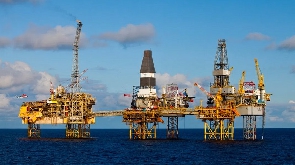
 PIAC therefore wants the government to focus on attracting investment, improving existing oilfields
The Public Interest and Accountability Committee (PIAC) has called on the government to attract fresh investment into Ghana’s Tweneboa, Enyenra and Ntomme (TEN) oilfield to improve production, which has fallen below initial expectations.
According to the committee, the absence of new drilling activities at the field raises concerns about its future production and highlights the need for additional investment to sustain Ghana’s oil industry.
In its 2026 semi-annual report, PIAC revealed that no drilling or completion of new wells took place at the TEN field during the first six months of the year.
Data from the Ghana National Petroleum Corporation (GNPC) also showed that no money was spent on developing new wells during the period.
CAGG petitions Attorney General to investigate Sammy Gyamfi
Instead, the field recorded a net credit of US$700,000, representing a reversal of expenses that had been overstated in previous years.
PIAC noted that a similar situation occurred during the first half of 2025, when no new drilling or well completion activities were undertaken.
The committee, however, indicated that it had yet to receive direct confirmation of the latest figures from Tullow Ghana Limited, the operator of the field.
To address the situation, PIAC has urged the government, through the Petroleum Commission, to develop measures to encourage more investment in existing oilfields, particularly TEN.
It also recommended stronger regulations, improved investment conditions and better geological data collection to support oil exploration in other parts of the country.
Meanwhile, Ghana’s petroleum revenue increased by 52% to US$561.41 million in the first half of 2026, compared with US$370.34 million during the same period in 2025.
PIAC attributed the increase mainly to higher crude oil prices and a 37% rise in corporate income tax collected from petroleum companies.
During the period, Ghana’s crude oil sold at an average price of US$92.81 per barrel, above the government’s benchmark price of US$76.22.
However, the committee’s findings suggest that higher oil revenue does not necessarily mean the country is producing more oil, as rising global prices can boost earnings even when production remains weak.
Ghana’s 'New Economy' Policy: What it is about and when it will be introduced
PIAC therefore wants the government to focus on attracting investment, improving existing oilfields and encouraging new exploration to safeguard Ghana’s future petroleum production and revenue.
DR/MA
Inside Ghana’s First 950,000-Barrel Sankofa Oil Shipment | Exclusive Tour

Copyright © 1994 - 2026 GhanaWeb. All rights reserved.










