


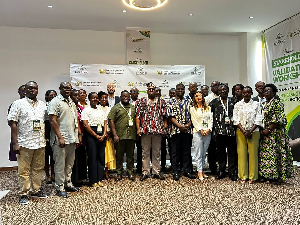
 Seidu Issifu, said the plan would help strengthen food security
Ghana has taken a step towards developing a sustainable and climate-resilient food system with the validation of its Draft National Plant-Based Food Systems Plan.
The Minister of State for Climate Change and Sustainability, Seidu Issifu, said the plan would help strengthen food security, promote agricultural diversity and improve the livelihoods of farmers and rural communities.
Speaking at a validation workshop in Accra on Wednesday, October 28, 2026, Issifu said Ghana’s agricultural sector faced growing threats from climate change, including erratic rainfall, droughts, floods and declining soil quality.
He said addressing these challenges required coordinated action across agriculture, climate change, nutrition, public health, trade and environmental sustainability.
Issifu explained that the proposed plan was not intended to impose dietary choices on Ghanaians but to encourage the production and consumption of locally cultivated crops while creating opportunities for agro-processing and job creation.
He highlighted the potential of indigenous crops, legumes, fruits, vegetables, roots and tubers to improve dietary diversity, strengthen local value chains and reduce dependence on imported food products.
The minister called on government institutions, development partners, farmer-based organisations, academia, civil society and the private sector to contribute to the validation process to ensure the final document reflected Ghana’s development priorities and local realities.
He stressed that the plan must include clear priorities, practical interventions, defined institutional responsibilities, sustainable financing mechanisms and measurable outcomes to ensure effective implementation.
Issifu reaffirmed his office’s commitment to integrating climate action into Ghana’s development agenda, adding that sustainable food systems could help build climate resilience, protect natural resources, improve public health and create economic opportunities.
He expressed confidence that contributions from stakeholders would help produce a practical and effective national framework to strengthen local food systems, promote sustainable livelihoods and build resilience for present and future generations.

Copyright © 1994 - 2026 GhanaWeb. All rights reserved.










