


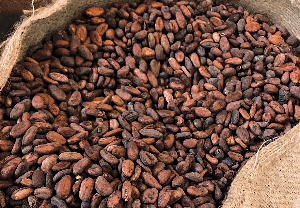
 Cocoa is a key export commodity for Ghana
Cocoa farmers in Ghana are hoping for improved harvests by March next year after a difficult start to the current season, with excessive rainfall in some areas and prolonged dry spells in others affecting production.
A Reuters report indicates that unpredictable weather conditions have disrupted cocoa production, with some farmers reporting that heavy rains caused flowers to fall before pods could develop, while others said insufficient rainfall and high temperatures caused flowers to wither.
The report said harvests have fallen sharply compared with the previous season, raising concerns about Ghana’s cocoa output.
A cocoa farmer, Joseph Agbeko told Reuters that he had harvested only five bags since the season began, compared with 31 bags, equivalent to about two tonnes, during the same period last year.
He expressed concern that production could decline significantly this season but remained hopeful that the recent return of rainfall would improve yields.
“It has now started raining, so we are looking forward to an improved harvest by March next year,” he said.
Reuters further reported that the Ghana Cooperative Cocoa Farmers and Marketing Association, an umbrella body for farmer cooperatives, had cautioned that it was too early to predict whether harvests would improve by March.
The association’s administrator, Moses Djan Asiedu, said visits to farms in four cocoa-growing regions revealed different weather-related challenges.
He explained that excessive rainfall in some areas had caused cocoa flowers to fall before pods could develop, while a lack of rain in other locations had caused flowers to wither and die.
“If the rains come in the right quantities, fruiting will start again. If the harmattan does not set in heavily in January, we could see some improved harvest from March. But this is not predictable,” Asiedu told Reuters.
The harmattan, a seasonal wind that blows from the Sahara Desert between December and March, typically brings dry conditions that could further affect cocoa production.
Asiedu also raised concerns about delays in the distribution of fertiliser to farmers.
He said fertiliser, which is usually applied between March and May, arrived in August this year, leaving some farmers still waiting to receive their supplies.
According to Reuters, COCOBOD did not immediately respond to questions about the reasons for the delay in fertiliser distribution.
The report further indicated that Ghana’s cocoa regulator, the Ghana Cocoa Board (COCOBOD), had projected a decline of at least 16 percent in cocoa production for the 2026/2027 season.
COCOBOD gave the projection to Reuters in July, citing factors including the El Niño weather pattern and excessive rainfall in May and June.
The regulator did not respond to a request for an updated production forecast.
The Ghana Meteorological Agency, in a statement on Sunday November 1, 2026, confirmed a strong El Niño and warned that parts of the country could experience prolonged dry spells, potentially affecting agricultural production.
Ghana produced 771,000 metric tonnes of cocoa in the previous season, exceeding its target of 650,000 tonnes.
COCOBOD has not yet announced a production target for the current season.
MA

Copyright © 1994 - 2026 GhanaWeb. All rights reserved.










