



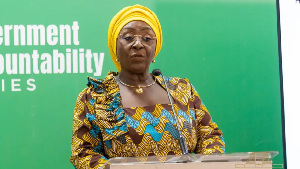
 Minister of Tourism, Culture and Creative Arts, Abla Dzifa Gomashie
On August 10, 2026, the Minister of Tourism, Culture and Creative Arts, Abla Dzifa Gomashie, took her turn at the Government Accountability Series.
Nineteen months into the National Democratic Congress (NDC) administration, the address presented impressive headline numbers: $4.34 billion in tourism receipts for 2025, over 1.3 million international arrivals, the listing of Highlife music on UNESCO’s Intangible Cultural Heritage list, and the operationalization of "The Black Star Experience."
However, looking past these diplomatic and marketing milestones, there seems to be a notable gap between manifesto promises, budgetary commitments, and practical execution on the ground.
The Black Star Experience: Manifesto Commitments vs. Ministerial Record
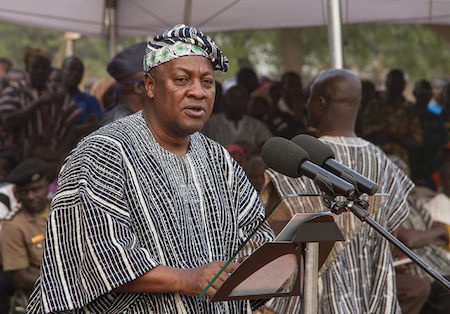
Officially launched by President John Mahama on May 1, 2025, The Black Star Experience was designed as the NDC’s flagship initiative, a year-round framework intended to position Ghana as a global cultural hub.
According to the 2024 NDC Manifesto, ‘Building the Ghana We Want’, the campaign promised a structured calendar of monthly celebrations across major creative disciplines.
Yet a close examination of what was promised versus what has been delivered reveals that many of these dedicated months remain inactive or have been replaced by smaller, standalone events.
The Pan-African Month, envisioned to celebrate heritage and diaspora engagement, was not launched in its promised format.
Instead, the Ministry introduced the Pan-African House Initiative—a month-long cultural exchange residency under the African Monologue Challenge framework for 12 creative finalists.
Meanwhile, PANAFEST continues to run independently as a biennial event established back in 1992.
Similarly, dedicated monthly celebrations for specific creative sectors were largely absent from the Minister's report.
The Ghana Film Festival and Awards Month and Ghana Music World Month were both omitted without updates.
The proposed Culinary Month was substituted with a two-day Afrogastro Festival in October.
For Fashion and Textiles, the Ministry relied on the existing March "Wear Ghana Month" tradition while introducing National Fugu Day to encourage wearing Fugu on Wednesdays.
Only the Literacy and Literary Month, launched in 2025, continues to be observed through traditional February programs managed by the National Commission on Culture.
But how much was generated?
At its launch, The Black Star Experience was projected to inject $5 billion (around GH₵78 billion) into the Ghanaian economy by the end of 2027.
However, when pressed during the Accountability Series on how much revenue the initiative has actually generated so far, Minister Gomashie was unsure.
"We need a way in which we measure the contributions of the sector to the GDP. Which is why we are working with the Statistical Service.
" Until we have those, it is difficult to measure. But I believe that in total, the efforts we are making... show we are on the right track,” she said.
This admission points to a policy contradiction, why was a $5 billion revenue target set for a flagship initiative without an active statistical framework to measure its real economic returns?
By comparison, the previous administration’s flagship campaign, the 2019 Year of Return, operated with direct revenue tracking that recorded $3.3 billion in total economic impact.
Budgeted Millions Stuck in Bureaucracy
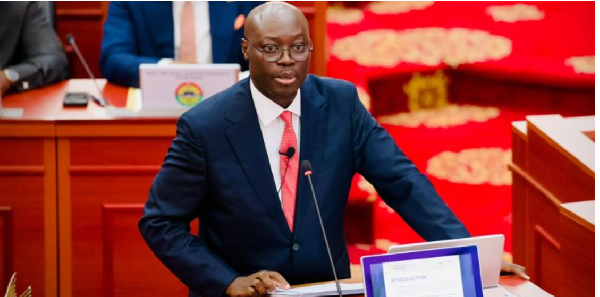
In November 2025, Finance Minister Dr. Cassiel Ato Forson presented the 2026 National Budget, outlining two major financial lifelines for the sector: GH¢20 million in seed funding for the Creative Arts Fund to support startups and SMEs across music, fashion, visual, and culinary arts, and another GH¢20 million for the Film Development Fund aimed at increasing film's GDP contribution from 0.2% to at least 1%.
Despite these combined GH¢40 million line items, not a single Ghana Cedi has reached working artists, filmmakers, or creative enterprises.
The delay stems from a legislative bottleneck. Statutory state funds cannot disburse money without passed governing regulations.
The necessary Legislative Instruments (L.I.) for both funds remain parked at the Office of the Attorney-General awaiting transmission to Parliament.
Until this legal machinery moves forward, the administration's primary financial support mechanism for the creative sector exists purely on paper.
Infrastructure and Royalties
The administration’s progress on physical infrastructure and copyright protection shows limited momentum:
Regarding national venues, the Minister announced a basic maintenance schedule to halt the deterioration of the National Theatre, alongside a proposed Ghana-China bilateral renovation partnership.
However, physical construction work has yet to commence.
Meanwhile, the capital-intensive "Cultural Villages" outlined in the manifesto remain unbuilt, while unfinished regional theatre projects inherited from the previous government are currently under evaluation rather than active construction.
On the intellectual property front, copyright enforcement and royalty collection remain critical friction points.
While the Ministry highlighted ongoing consultative meetings with industry stakeholders, no concrete digital tracking platforms or unified royalty collection systems have been deployed.
As a result, Ghanaian musicians, filmmakers, and content creators continue to suffer losses from systemic piracy and uncollected broadcast royalties.
Final Takeaways
Minister Dzifa Gomashie’s progress report confirms that Ghana continues to excel at high-level cultural diplomacy, international destination branding, and global positioning.
The UNESCO Highlife listing and $4.34 billion in 2025 tourism receipts give the Ministry legitimate headline victories.
However, local creative professionals continue to operate in an environment where themed promotional months are largely inactive or replaced by brief one-off events, GH¢40 million in targeted funding remains frozen by legislative delays at the Attorney-General's department, and tracking mechanisms are not yet in place to verify whether multi-billion-dollar tourism projections are materializing.
Until ministerial talks turn into parliamentary action, the core drivers required to build a sustainable domestic creative economy will remain unfinished.
ID/EB

Copyright © 1994 - 2026 GhanaWeb. All rights reserved.










