



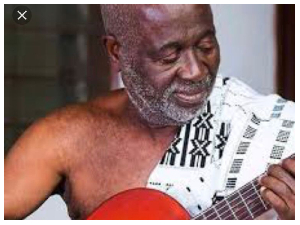
 Ephraim Amu is considered to be the father of the country’s ‘art-music tradition'
Ephraim Amu is widely acclaimed as Ghana’s greatest proponent of the religious choral music (singing band) and nationalistic anthems.
He was born in Peki in the Volta Region in 1899 and is considered to be the father of the country’s ‘art-music tradition’.
Amu composed an enormous number of hymns and patriotic songs in Ewe and Akan from the 1920s.
One of his compositions entitled “Yen Ara Asase Ni’ (This Land is Ours) has become, in effect, Ghana’s second national anthem.
In 1933 he published his book, 25 African Songs (Sheldon Press).
In 1927 he joined the staff of the Akropong Presbyterian Training College and his endeavor to “Africanize” the Church (by wearing traditional cloth on the pulpit) led to his dismissal from the Teachers Training College in 1932.
The untold story of Dr Kwame Nkrumah as an MP
This opened the way to a long academic career. He taught music at Achimota College for many years, where he introduced the idea of so-called Tribal Nights at the end-of-term, when students had to get out of their school uniforms and wear their indigenous clothes and play indegenous
music and dance.
In the 1950s Amu went on to teach at the university music departments in Kumasi, Winneba and Legon.
At Legon he was a member of the African Music Society that promoted both traditional music and that of the guitar highlife bands of E K Nyame and Kwabena Onyina.
From 1962 Amu became a Research Fellow at the Institute of African Studies at Legon and made many field trips, recording traditional music on reel-to-reel tape.
Amu, alongside Professor Nketia, Annan Mensah and others, contributed to the important collection of 600 hours of recordings of Ghanaian ethnic and popular music, folk-tales and dramas, now housed at the Institute of African Studies- Legon.
From 1965 Amu became the Head of the School of Performing Arts. He retired in 1971 and continued, in Peki, to compose piano pieces, run a choral group and give advice to those entering the music field. He died in 1995.
This remarkable legacy is reflected in the fact that Amu was given a State Burial and his picture is the first of a contemporary musician ever to appear on a Ghanaian currency note.
SO/VPO
Rev Dr Ebenezer Conduah arrested and remanded into custody

Copyright © 1994 - 2026 GhanaWeb. All rights reserved.










