



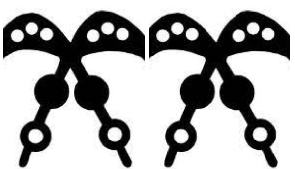
 File photo of Adinkra symbol
The origin of Ghana’s iconic Adinkra symbols is a deeply cultural narrative that remains underexplored in mainstream historical discussions.
These symbols, rich with meaning, reflect proverbs, aphorisms, and profound philosophical insights about life, spirituality, and community.
Over the years, Adinkra has become a visual language widely used by both royals and ordinary Ghanaians during ceremonies and celebrations.
But one may ask: Which ethnic group in Ghana first created these powerful symbols that have now become central to the nation's cultural identity?
The Adinkra symbols are said to have originated among the Bono Gyaman people of present-day Ghana and Côte d’Ivoire. The name "Adinkra" is derived from Nana Kofi Adinkra, the first traditional ruler of the Gyaman Kingdom.
68th Independence Day: Watch military depict Adinkra symbols during parade
Historical accounts suggest that Nana Kofi Adinkra was the first person known to wear fabric printed with these symbols, using them as a form of royal expression.
According to research conducted by GhanaWeb’s Joseph Henry Mensah, the widespread use of Adinkra symbols began after the Asantes learned and adopted the craft following a tribal war in the early 1800s.
The Asantes reportedly encountered the symbols after a conflict with the Bonos, which was sparked when Nana Kofi Adinkra and his people created a replica of the Asante Golden Stool, a sacred symbol of Asante sovereignty.
This act led to a tribal war in 1818, during which Otumfuo Osei Bonsu Panin, the then Asante king, defeated and captured Nana Kofi Adinkra.
It is believed that the gold from the seized replica stool was melted and used to create images of Adinkra with wailing mouths, symbolizing sorrow, loss, and defeat.
From this historic war emerged the name "Adinkra", which eventually came to represent the symbols that were later stamped on cloth, furniture, earthenware, sculptures, and many other traditional items.
Decoding Mahama's Inauguration Outfit: A celebration of culture and symbolism
Once the Asantes adopted and incorporated the Adinkra symbols into their culture, particularly through fabric printing, the symbols and their meanings began to spread throughout other Akan kingdoms and eventually into the African diaspora.
JHM/EB
Also catch the latest episode of Talkertainment with Ghana’s most-sought-after MC/Hypeman, Kojo Manuel, below:

Copyright © 1994 - 2026 GhanaWeb. All rights reserved.










