



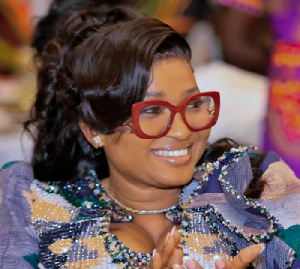
 CEO of the Ghana Tourism Authority, Marilyn Maame Efua Houadjeto
For decades, Ghana’s tourism story has been rich with promise. Anchored in history, culture, and a reputation for warmth and stability, the country has long held a unique place in global imagination.
Yet as global tourism evolved, so did the need for Ghana to move beyond isolated moments of attention toward a more deliberate, sustained, and strategically aligned cultural presence.
By 2025, Ghana stood at a pivotal crossroads. The assets were clear. The potential is undeniable.
What remained was the task of coherence. It is within this context that Maame Efua Houadjeto’s leadership at the Ghana Tourism Authority began to quietly redefine the nation’s cultural tourism momentum.
Importantly, this transformation did not come through disruption for its own sake. Existing programmes were not discarded.
They were strengthened, expanded, and repositioned for longevity, ensuring continuity while increasing impact.
A post by Ghanaian communications, marketing and tourism expert, Francis Doku, on social media, highlighted that Efua Houadjeto’s approach focused on systems, alignment, and long-term value, positioning culture not as an accessory to tourism, but as its engine.
He mentioned that from the earliest months of the year, the direction was evident. Internal reforms, staff capacity-building initiatives, and structured engagements with sector leaders signalled a reset in how tourism would be governed, communicated, and delivered.
Heritage-based training programmes and leadership dialogues underscored a belief that sustainable tourism begins with institutions that understand their mandate and people equipped to execute it.
He stated that as the year unfolded, strategy gave way to tangible milestones, and one of the most defining moments of 2025 was the consolidation of ‘December in Ghana’.
What had grown organically into a globally recognised festive season was carefully formalised into a nationally coordinated tourism product.
To him, this was not an attempt to sanitise popular culture, but to steward it responsibly, ensuring that economic benefits reached local businesses, creatives, and communities while protecting the authenticity that made the season powerful in the first place.
"As CEO of the Ghana Tourism Authority, Marilyn Maame Efua Houadjeto has overseen a deliberate reset in how Ghana approaches tourism — one that positions culture, creativity and people not as soft attractions, but as strategic assets for global engagement and economic growth. The emphasis has been less on noise and more on structure; less on isolated moments and more on systems," parts of Francis Doku's post read.
Heritage Month followed, centering Ghanaian identity, tradition, and indigenous expression within the national calendar. Culinary initiatives also evolved.
Rather than abandoning existing platforms, programmes such as ‘Taste of Ghana’ were reimagined and elevated, culminating in ‘Taste 68 at 68’, an expanded national culinary showcase that connected food, history, enterprise, and celebration.
The shift reflected a broader philosophy: tourism initiatives must be designed not just for moments, but for continuity and generational relevance.
Festivals, including the Kwahu Paragliding Festival, were similarly repositioned as multi-dimensional platforms where adventure tourism, regional development, and cultural pride intersected.
These activations demonstrated how leisure, landscape, and local economies could be intentionally woven into the tourism narrative.
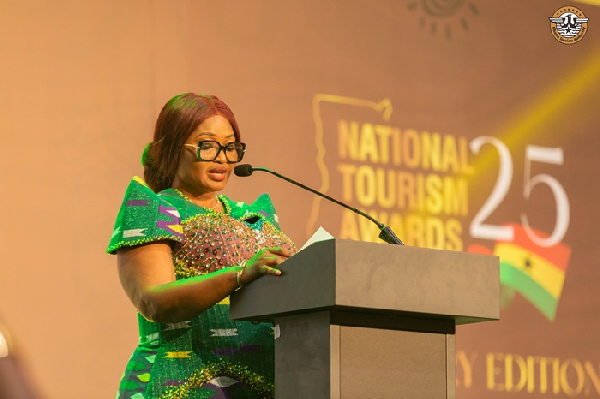
A less visible but equally significant pillar of Maame Efua’s 2025 leadership was the strengthening of sports tourism.
In the world of sports, there was a recognition that sport is a core passion of everyday Ghanaians at home and across the diaspora. Tourism engagements increasingly acknowledged the role of sports in shaping national identity and global visibility.
Ghana’s sporting legacy, carried by icons celebrated worldwide, has long driven travel, gatherings, and emotional connection.
By integrating sports-related activities and partnerships into the tourism framework, 2025 laid the groundwork for positioning Ghana as a natural cultural and hospitality hub around major international sporting moments.
This approach holds particular significance as the world looks ahead to upcoming global tournaments, including the next FIFA World Cup cycle.
The systems, partnerships, and cultural alignment strengthened in 2025 create pathways for Ghana to capture tourism value linked to sports viewing, diaspora homecomings, fan travel, and cultural festivals tied to global sporting calendars.
Meanwhile, beyond Ghana’s borders, 2025 was equally intentional. International tourism engagements elevated Ghana’s profile as a confident cultural destination with a clear voice.
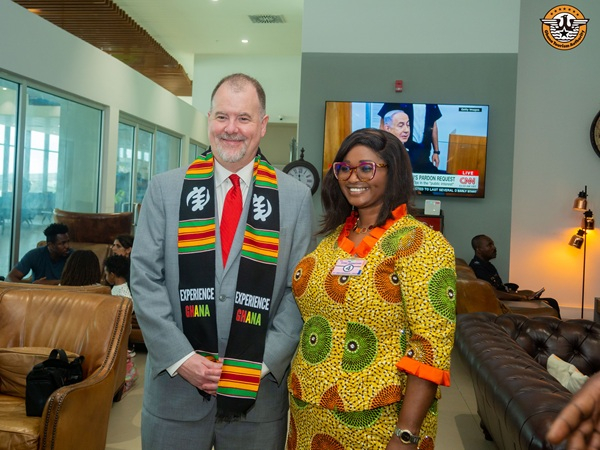
At major global platforms, Ghana’s presence reflected not just visibility but purpose, emphasising partnerships, market access, and long-term positioning.
Continental forums reinforced Ghana’s leadership in regional tourism integration, while diplomatic engagements demonstrated how tourism could serve as a tool for international collaboration and cultural exchange.
Amidst all this, a defining feature of the year was collaboration. Traditional authorities, creative practitioners, hospitality leaders, international partners, and government agencies all featured prominently across initiatives.
This was not incidental. It reflected a leadership style grounded in partnership and shared ownership, recognising that tourism thrives not in isolation, but through trust, coordination, and collective effort.
What ultimately distinguishes 2025 is not the volume of activities led but their intentional connection. Heritage-informed festivals. Festivals drove tourism. Tourism strengthened diplomacy.
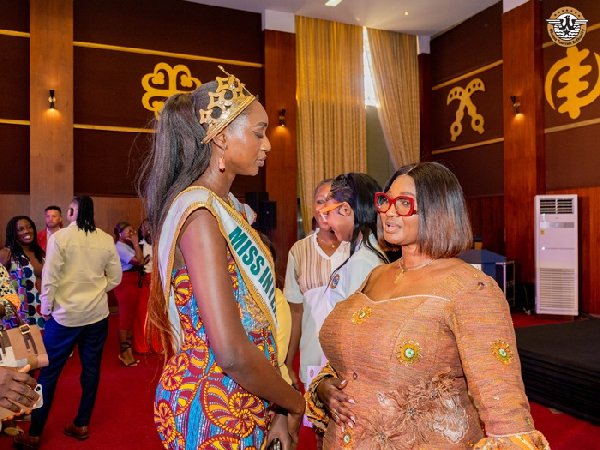
Diplomacy opened pathways for investment. Sports amplified national pride and
diaspora engagement.
Each initiative reinforced the next, forming a cohesive national narrative now widely understood as the Black Star Experience.
As Maame Efua Houadjeto has often noted, systems and strategies alone do not define the Ghanaian experience.
“One of Ghana’s greatest tourism assets is our people. The warmth,” she said, establishing that the openness and everyday hospitality of Ghanaians are what visitors remember long after the events and landmarks.
“As we strengthen our programmes and global positioning, we are intentional about preserving that human connection. It is part of the experience we offer and something we must never lose sight of,” she added.
As Ghana charts 2026 and beyond, the work of 2025 stands as a turning point. It
demonstrates what is possible when leadership prioritises continuity over disruption, coherence over noise, substance over spectacle, and long-term impact over short-term attention.
The story of Ghana’s cultural tourism is still unfolding. But the momentum built in 2025 has set a clear direction, one defined by intention, integrity, and a deep belief that culture, when properly stewarded and warmly shared, is among a nation’s most powerful assets.

Copyright © 1994 - 2026 GhanaWeb. All rights reserved.










