



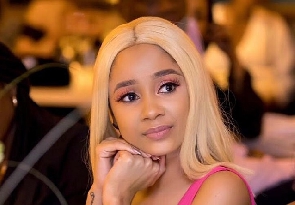
 Sister Derby is a Ghanaian media personality and socialite
Ghanaian musician and media personality, Sister Derby, has described Ghana’s anti-LGBTQ debate as a distraction from more pressing national challenges, including illegal mining (galamsey), deforestation, and other socio-economic concerns.
Speaking in a recent interview on Asempa FM, she argued that discussions surrounding LGBTQ rights have become what she described as “Ghana’s favourite topic,” often overshadowing issues that require urgent national attention.
According to Sister Deborah, the prominence of the anti-LGBTQ conversation has been used to divert public attention away from critical challenges facing the country.
Sister Derby recounts a 2014 GHOne–Charterhouse controversy involving Shatta Wale
“Ghana’s most passionate issue to distract us from galamsey, from deforestation, from flooding, from maternal death, and so many others,” she said
Sister Derby suggested that the current resistance to LGBTQ identities is largely rooted in religious influences rather than traditional African cultural practices.
She explained that after exploring aspects of African history, she came to the conclusion that African societies have historically coexisted with queer individuals, including masculine-presenting females and feminine-presenting males, without significant societal conflict.
“The sad thing about the whole thing, in my opinion, is that all this confusion and division amongst us as a people is from religion. I see it that way because I’ve read from our African history and our roots, which of course the colonizers didn’t want to document enough of, because it didn’t portray us the way they wanted us to be portrayed as black people and as Africans.
“But the papers and the notes out there about African history are that our forefathers, whether Ashanti’s, whether Ewes, were living in harmony with queer people,” she said
Reflecting on past national crises, Sister Deborah noted that Ghana and other African countries have previously faced serious challenges such as cholera outbreaks, malaria, the COVID-19 pandemic, and Ebola.
However, she said queer people were never identified as a societal problem during those periods.
'Don't go to someone's country and say there's no money in yours' - Michy to Ghanaians
She further argued that the anti-LGBTQ discourse gained significant political attention in late 2020 and early 2021 after the country’s two major political parties, the National Democratic Congress (NDC) and the New Patriotic Party (NPP), became heavily involved in conversations surrounding the issue.
“Right now, the whole thing has become like the two major political parties just trying to show each other and pepper each other,” she said
To illustrate her point, she recounted an incident involving a masculine-presenting woman in her neighbourhood who was allegedly confronted and harassed by soldiers who questioned whether the individual was male or female because of her appearance.
“When this bill hula balu started in 2020, early 2021, there was a lady in my area who is naturally boyish looking, soldiers in my area caned her, asking her if she was a boy or a girl,” she recounted
Maintaining her stance, Sister Derby said she does not view being queer as a problem and believes people should not be subjected to discrimination based on their appearance or identity.
For a long time, Sister Derby has been an advocate for the queer community, and her comments add to the ongoing national conversation surrounding LGBTQ rights and the proposed anti-LGBTQ legislation, a subject that continues to generate strong debate across Ghana.
@asempa_fm The LGBTQ+ Bill has become one of the most effective distractions from the pressing issue of galamsey in Ghana - @sisterdeborah #asempashowbizreview #AsempaFM ♬ original sound - ASEMPA FM

Copyright © 1994 - 2026 GhanaWeb. All rights reserved.










