



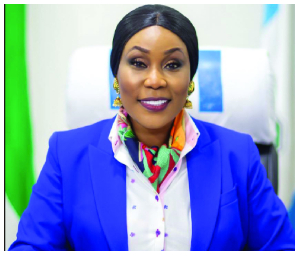
 Julie Okah-Donli, Former Director-General of NAPTIP
Former Director-General of Nigeria’s National Agency for the Prohibition of Trafficking in Persons (NAPTIP), Julie Okah-Donli, has made startling allegations about what she describes as elaborate fake pregnancy schemes allegedly used to facilitate baby trafficking.
Speaking on the Kaa Truths Podcast, Okah-Donli claimed that some women allegedly go to extreme lengths to convince their spouses and relatives that they are pregnant, only to later present babies obtained through illegal means as their biological children.
According to her, some of the women are allegedly administered steroids that cause noticeable physical changes, including swollen faces and enlarged abdomens, creating the appearance of pregnancy.
'Some are in bad relationships' - Akosua Agyapong slams journalists over marriage questions
“They are injected with steroids… Their faces are bloated up, and their tummies are actually very big. They look pregnant, but they are not pregnant,” she said.
Okah-Donli further alleged that the deception extends beyond physical appearance. She claimed that some women imitate pregnancy-related symptoms whenever their husbands are present and later arrange circumstances that prevent them from witnessing the delivery before introducing a baby as their own.
She also alleged that certain individuals undergo procedures to create scars resembling those left by caesarean section surgeries in an effort to make the fabricated pregnancies appear authentic.
The former NAPTIP boss used the interview to advocate for maternity testing alongside paternity testing in disputed child-related cases, arguing that such measures could help investigators expose baby trafficking networks.
According to her, claims of giving birth to twins, triplets, or quadruplets are sometimes allegedly used to justify the sudden appearance of multiple infants.
Her comments have since sparked conversations on social media about child trafficking, adoption processes, and the need for stronger safeguards to protect children from exploitation.
PAT/EB

Copyright © 1994 - 2026 GhanaWeb. All rights reserved.










