



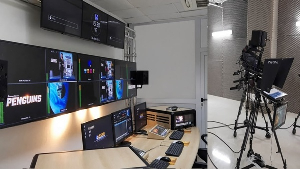
 File photo of a split-view of a professional television broadcast facility
The Ghana Music Rights Organisation (GHAMRO) has named 16 radio and television stations it says are complying with their music royalty payment obligations out of more than 700 broadcasters across the country.
The organisation has long faced challenges in collecting royalties from music users. Its latest announcement draws attention to the few broadcasting stations that pay for the use of music in their programmes.
In a post on X on Wednesday, October 14, 2026, GHAMRO praised the 16 stations for meeting their obligations, noting that payments from broadcasters help ensure that musicians and other music rights holders receive money for their creative work.
Court issues fresh order against Odumodublvck
“When radio and TV stations comply with copyright laws and fulfill their music licensing obligations, our local artists, songwriters, and publishers get compensated for their hard work and creativity! We celebrate and appreciate our Top Complying 2026 Broadcasting Channels for leading by example, respecting copyright laws, and directly championing the Ghanaian creative economy,” GHAMRO stated.
The stations named by the organisation for compliance are:
Joy FM
Hitz FM
Asempa FM
Adom TV
Adom FM
Luv FM
Nhyira FM
Joy Prime
Sporty FM
Pent Radio
Pent TV
Citi FM
Channel One TV
PCG TV
Hope FM
Lucky TV
Other businesses also required to pay royalties
Beyond radio and television stations, several other businesses and establishments that use music in their operations are also required to pay royalties.
Information on the organisation’s official website indicates that Section 36 of Ghana’s copyright law requires certain businesses that play music publicly or use it for commercial purposes to obtain the appropriate music licence.
Ex-Ghana defender Anthony Baffoe appointed CAF Deputy General Secretary
These include event centres, live music venues, mobile disc jockeys (DJs), pubs, bars, restaurants, shopping malls, retail shops, nightclubs, banks, transport operators, churches, local eateries, filling stations, lounges, cinemas, barbering shops and beauty salons.
Digital streaming platforms and telecommunications companies are also included among the music users identified by GHAMRO.
Radio and television stations are equally covered by the licensing requirements because they use music in their broadcasts and other programmes.
GHAMRO is responsible for licensing music users, collecting royalties and distributing the money to the people who own the rights to the music. These include composers, lyricists, arrangers, performers and music publishers.
The payments are intended to ensure that people who create and contribute to music receive compensation when their work is used by broadcasters, businesses and other users.
AK/AM

Copyright © 1994 - 2026 GhanaWeb. All rights reserved.










