



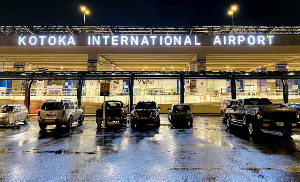
 The Kotoka International Airport is set to be renamed
Kotoka International Airport has, over the decades, become Ghana’s principal gateway to the world. The name itself has gained global recognition and is firmly embedded in international aviation, diplomacy, and commerce. Any proposal to alter such a historically and symbolically significant name demands sober reflection rather than haste.
The debate over the airport’s name is rooted in Ghana’s post-independence political history, particularly the role of Emmanuel Kwasi Kotoka in the 1966 coup that overthrew Ghana’s first President, Kwame Nkrumah. Critics argue that Kotoka’s involvement in that episode permanently stains his legacy and makes his commemoration inappropriate. Yet an honest historical inquiry must go further.
It is worth asking under what circumstances the airport was named, who made that decision, and why successive civilian and military governments chose to retain the name for decades if it was indeed an egregious historical error. The absence of such inquiry, coupled with the current rush to rename the airport, raises legitimate concerns.
Another dimension of the debate frames the issue through a regional or ethnic lens, noting that Kotoka hails from the Volta Region. While ethnic arguments should not dominate national discourse, it would be intellectually dishonest to dismiss the symbolic importance of national recognition for different regions. Retaining Kotoka’s name, in this sense, has been viewed by some as a marker of inclusion rather than an endorsement of military intervention. This perspective, though delicate, is not without merit.
Equally puzzling is the timing of the renewed agitation. If the moral and historical objections to Kotoka’s name are as compelling as they are now presented, why were they not acted upon during earlier periods of governance? Notably, the National Democratic Congress governed Ghana for a cumulative period of sixteen years, including from 2009 to 2017, yet did not pursue a name change. Other administrations similarly showed no urgency in this regard. The obvious question, therefore, is: why now?
Thus far, no sufficiently compelling, pragmatic, or nationally unifying rationale has been offered to justify the urgency of the proposed change. References to alleged “spiritual consequences” tied to the airport’s name, as cited by some petitioners, lack empirical support and do little to elevate the seriousness of the debate. At a time when Ghana faces pressing socio-economic challenges, it is reasonable for citizens to question whether renaming an international airport is an optimal use of state attention and political capital.
This is not to diminish the towering legacy of Kwame Nkrumah, whose contributions to Ghana and Africa remain monumental, even if his administration was not without flaws. Ghana already honors his memory extensively through institutions and monuments nationwide. History, however, is rarely reducible to saints and villains. While Kotoka’s role in the 1966 coup is undeniable, his place in Ghana’s historical narrative should be treated with nuance rather than outright erasure.
National memory should be guided by critical reflection, balance, and priority-setting. Any decision to rename such a significant national institution must be grounded in broad consensus, sound reasoning, and a clear sense of the national interest, not in haste or symbolism detached from pressing realities.

Copyright © 1994 - 2026 GhanaWeb. All rights reserved.










