



 Communications networks face a similar problem
When a mobile-money payment fails or a hospital cannot reach a referral team, the customer does not ask which fibre route is down. The immediate question is whether there is another way to complete an essential task. That should also be the starting point for Ghana’s approach to telecommunications resilience.
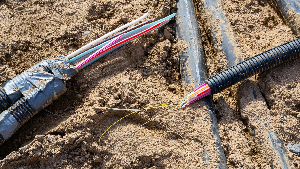
On 26 September 2026, the National Communications Authority reported disruptions to voice and data services across the five northern regions and parts of Oti. Multiple fibre cuts had affected three transmission routes, disrupting or degrading 2G, 3G and 4G services. The Authority announced restoration the same day, following repairs by the National Information Technology Agency and network operators.
The repair teams deserve credit. Their work should be followed by an equally serious examination of how essential communications can continue while damaged infrastructure is being restored.
A second route must offer a different way through
Imagine two roads linking a town to the rest of the country. If both cross the same bridge, a failure at that bridge can close both roads. Having two routes is useful only if the alternative survives the event that disables the first.
Communications networks face a similar problem. Separate connections can occupy the same trench, cross the same bridge or depend on the same power supply. Buying services from different providers does not, by itself, establish that the underlying infrastructure is independent.
This is a general engineering lesson, not a finding about the September incident. The NCA’s public notices do not establish the precise network layout, the causes of the cuts or who was responsible. Those questions require a technical investigation. What the disruption does justify is asking whether alternative routes can withstand shared risks.
Preventing damage requires coordination beyond telecoms
The NCA’s Communications Industry Report for 2023 recorded 751 fibre cuts across four reporting domestic fibre operators. It identified road construction, private development, utility work and fire among the main causes. These are historical figures, not a count of incidents this year.
That record shows why the response must reach beyond network operators. Road agencies, local authorities, utilities and contractors need reliable information about buried infrastructure before excavation begins. A practical notification process, verified utility checks and clear emergency contacts can help prevent damage and speed up repairs.
This need not mean publishing sensitive network maps. Detailed records should be available to authorised organisations under appropriate safeguards. The public needs assurance that coordination works, rather than a map of infrastructure vulnerabilities.
Protect essential services during an outage
A realistic resilience plan must say what remains available when capacity is reduced. Emergency coordination and selected health facilities may need protected minimum connectivity even when ordinary traffic cannot run at its usual speed. Hospitals and other critical institutions should identify their essential communications and agree recovery arrangements with their providers.
The technical answer will vary by location. Physically diverse fibre remains the high-capacity foundation. Microwave or satellite connections may provide useful backup for selected services, provided they have adequate capacity, dependable power and tested switching arrangements. They should not be presented as universal replacements for major fibre routes.
Procurement should therefore ask a more demanding question than whether a supplier offers a backup link. Which failure can that link survive, how much traffic can it carry, and how quickly can users switch to it? A cheaper connection that shares the same point of failure may offer little additional protection.
A backup arrangement needs to be demonstrated under controlled conditions. Scheduled exercises should establish whether traffic actually moves to the alternative path and whether essential services remain usable. They should also test how long backup power lasts and whether the people responsible can coordinate a response.
The World Bank’s guidance on resilient telecommunications supports this risk-based approach, combining network design with monitoring, backups, emergency planning and incident reporting. Investment decisions should reflect local conditions and the consequences of failure. Installing every possible backup everywhere would be neither affordable nor necessary.
Start with a focused assessment of northern connectivity
I propose an NCA-led assessment, working with NITA, operators and the relevant infrastructure agencies, of the routes and facilities serving northern Ghana. It should establish where shared risks exist, what essential services can continue during major failures, and which improvements would deliver the greatest benefit for their cost.
The outcome should be a prioritised plan with named responsibilities and completion dates. A public summary could report restoration performance, backup-testing progress and completion of corrective actions without exposing sensitive technical details. Institutions purchasing connectivity should use those lessons to strengthen their own continuity plans.
The September repairs restored service. The next task is to reduce the consequences of the next failure. Ghana should judge progress by how reliably people can keep communicating and using essential services when a cable is cut. That is the assurance a digital economy needs.

Copyright © 1994 - 2026 GhanaWeb. All rights reserved.










