



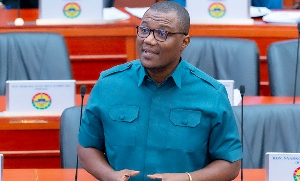
 Dr Nana Ayew Afriye is Member of Parliament for Effiduase/Asokore
The debate on whether Muslim students should be allowed to fast, pray, or wear the hijab in Christian mission schools has resurfaced with an intensity that demands clarity, honesty, and a respect for the foundations of our educational institutions. And as a country, I believe it is time we called a spade a spade.
Ghana is a secular state, yes—but it is also a nation that has greatly benefitted from the contributions of both Christian and Islamic missions. Each of these religious communities has established schools with distinct identities, values, and traditions. These identities are not cosmetic— they are the philosophical pillars that shape discipline, academic excellence, and the moral character these schools are known for.
We must be happy with what we bargained for.
When a parent or student chooses a Christian school—or an Islamic school—they are making a choice with full awareness of the environment they are entering. You cannot choose one and later demand that it conforms entirely to the practices of the other. That would be unfair, unproductive, and ultimately disruptive.
There are Islamic schools in Ghana. There are Christian schools in Ghana. Each has its ethos.
So when one elects to attend Wesley Girls, Presec, Adisco, Mfantsipim, Holy Child or any of the Catholic or Presbyterian institutions, one must understand the accompanying traditions—just as a Christian child attending an Islamic school would be expected to respect the norms of that environment.
This is not discrimination; it is principle.
The national conversation must not be reduced to emotional outbursts or polarising narratives that pit Muslims against Christians.
That is dangerous. What we need is balance: a recognition of the rights of students and a respect for the autonomy and traditions of institutions that have shaped generations of Ghana’s leaders.
We cannot destroy the very cultures that made these schools successful in the first place.
Background to the Debate
The longstanding issue of whether Muslim students should be allowed to fast, pray, or wear the hijab in Christian-founded schools reflects deeper questions about Ghana’s religious freedom and school autonomy.
Mission Schools and Their Identity
Many of Ghana’s elite senior high schools were founded by Christian missions. Although now state-funded, they maintain strong religious traditions—compulsory worship, structured devotion, and strict uniform codes. These rules are tied to their Christian ethos and long-established discipline systems.
Muslim Advocacy and Constitutional Rights
Muslim parents and groups argue that because these schools are public, they must accommodate:
Ramadan fasting
Hijab use
Time and space for Islamic prayers
Freedom from compulsory Christian worship
They cite constitutional protections of freedom of religion and non-discrimination.
Mission Schools’ Concerns
Christian mission bodies insist their schools have a right to preserve their character. They argue:
Students know the rules before admission.
Allowing multiple religious regimes complicates administration.
Some restrictions (like fasting) are based on health and supervision concerns.
The Clashing Principles
This debate essentially tests two legitimate principles:
Religious freedom for students
Institutional autonomy for mission schools
Both must be respected without one undermining the other.
Recurring Flashpoints
Schools like Wesley Girls’ have made headlines for resisting fasting or hijab use. These controversies often trigger national debates, petitions, and mediation by bodies like the National Peace Council.
Government Position
Government has usually sought compromise without imposing uniform policies, mindful of the sensitive nature of the issue and the historical partnership between the State and mission institutions.
Conclusion
My position is simple:
Let us respect the identities of our schools.
Let us respect the religious freedoms of citizens.
And let us choose institutions whose values align with our expectations—without forcing those institutions to abandon the very traditions that made them outstanding.
In the end, Ghana thrives not when we erase differences, but when we manage them with wisdom, tolerance, and honesty.
By Dr Nana Ayew Afriye
MP, Effiduasi-Asokore & Middle Belt Campaign Coordinator for Dr. Mahamudu Bawumia

Copyright © 1994 - 2026 GhanaWeb. All rights reserved.










