



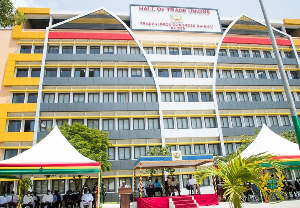
 TUC building
The numbers are embarrassing. If 400,000 TUC members on average contributed just US$45 a month, labour could raise US$1.08 billion in five years.
That is not small money. That is mining money. Power-sector money. Housing money. Agriculture money. Water and irrigation money. It is the kind of capital that builds nations.
Yet organised labour in Ghana has largely reduced itself to a loud talking shop, forever shouting for pitiful wage increases that inflation eats before workers reach home. Every year, same drama. Same press conferences. Same anger. Same tiny relief. No assets. No factories. No farms. No housing stock. No power projects. No serious wealth engine.
Globally, serious labour movements do not only complain. They own. Union pension funds in America control vast pools of capital. Canadian labour-sponsored funds have backed businesses. Scandinavian labour institutions helped shape powerful worker-capital models. They understood one brutal truth: workers who only beg for wages remain weak; workers who own productive assets become powerful.
TUC Ghana should be owning farms, mines, affordable housing estates, worker banks, water systems, power projects, industrial parks and logistics companies. It should be producing jobs, dividends and national influence.
Instead, it has mastered the microphone.
The tragedy is not that workers are poor. The tragedy is that organised labour has never seriously converted worker numbers into worker capital.
A union of 400,000 people should not be begging government every year like a stranded pressure group. It should be sitting across the table as an investor, employer, landlord, power producer and national economic force.
Wage increases are necessary, but wages alone will never liberate workers. Ownership will.
Until TUC learns this, it will remain exactly what it has become: a noisy institution managing poverty, not a serious movement creating wealth.

Copyright © 1994 - 2026 GhanaWeb. All rights reserved.










