



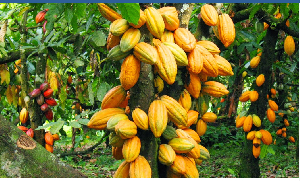
 File photo of cocoa
The global cocoa market is in turmoil, and cocoa farmers in both Ghana and Ivory Coast are feeling the pinch.
A significant drop in international cocoa prices has forced governments in these two leading producers to make difficult decisions, impacting the livelihoods of countless farmers and threatening the stability of their economies.
For cocoa farmers in Ghana, agitation has been brewing for some time.
The Ghanaian government, like its Ivorian counterpart, has been forced to reduce the price paid to farmers due to the plummeting value of cocoa on the international market.
This price reduction directly translates to lower incomes for farmers, many of whom rely solely on cocoa farming for their survival.
The situation highlights the vulnerability of economies heavily reliant on single commodities and their exposure to the fluctuations of global markets.
The situation in Ivory Coast, the world's leading cocoa producer, is arguably even more acute.
According to a recent Reuters report, the Ivorian government plans to take an unprecedented step: bringing forward the start of its cocoa mid-crop season.
This seemingly simple adjustment is intended to allow the country's regulator to drastically reduce the price paid to farmers for their beans. The logic behind this drastic measure is simple: the elevated prices of Ivorian cocoa have made it uncompetitive on the global market.
The stark reality is that Ivorian cocoa, previously a prized commodity, has become too expensive for buyers.
This lack of demand has resulted in a significant backlog of unsold cocoa beans, piling up in warehouses both inland and at the country's bustling ports. The image of these cocoa mountains serves as a powerful visual representation of the crisis gripping the Ivorian cocoa industry.
This oversupply, coupled with declining global demand, has created a vicious cycle, forcing further price reductions and exacerbating the problems faced by farmers.
The long-term consequences of this cocoa price slump are far-reaching.
Reduced income for farmers can lead to decreased investment in farming practices, potentially impacting future yields and the overall quality of the cocoa produced.
It can also fuel rural poverty and social unrest, as farmers struggle to meet their basic needs and provide for their families.
Furthermore, the economic instability can undermine government efforts to invest in infrastructure and social programmes, hindering national development.
In Ghana, the Mahama-led administration has proposed a long-term solution aimed at mitigating the impact of global price volatility.
The strategy centres on adding value to the cocoa beans domestically, rather than simply exporting them as raw materials.
The ambitious plan involves processing 50% of Ghana's cocoa internally in the upcoming seasons. This would involve investments in processing facilities, creating jobs in the manufacturing sector, and generating higher returns from value-added cocoa products.
This approach represents a crucial shift away from a purely commodity-based economy. By processing cocoa internally, Ghana can diversify its economy, reduce its dependence on fluctuating global prices, and potentially capture a larger share of the global cocoa value chain.
The processed cocoa products, such as cocoa butter, cocoa powder, and finished chocolate products, can be sold at higher prices than raw beans, generating increased revenue for the country and ultimately benefiting cocoa farmers.
Ultimately, the cocoa crisis facing Ghana and Ivory Coast underscores the need for diversification, value addition, and a more sustainable approach to commodity production.
The challenges faced by these two leading cocoa producers serve as a cautionary tale for other developing nations heavily reliant on single commodities.
The path to economic resilience lies in diversification, innovation, and a commitment to empowering local farmers and industries.
Only then can these nations effectively weather the storms of global market volatility and secure a more prosperous future for their citizens.
Watch NPP MPs in all-black as President Mahama delivers 2026 SONA

Copyright © 1994 - 2026 GhanaWeb. All rights reserved.










