



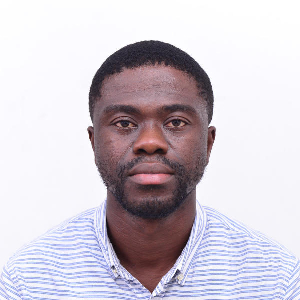
 Writer examines the UN’s role in global crises
Climate & Economic Policy Writer
In 1945, after two devastating world wars had left millions dead and entire societies shattered, nations came together to establish the United Nations (UN).
The promise was profound: to prevent future wars, maintain international peace and security, promote human rights and protect succeeding generations from the scourge of conflict.
More than eight decades later, however, an uncomfortable question remains: Has the United Nations sometimes failed the very people it was created to protect?
This is not an argument that the UN has achieved nothing. Its agencies have delivered humanitarian assistance, supported refugees, facilitated peace negotiations, monitored elections and provided essential services to millions of people around the world.
The problem is the gap between its promise and its ability to act when wars erupt and the interests of powerful states collide.
Rwanda: When the world watched
Few events demonstrate this gap more painfully than the 1994 genocide against the Tutsi in Rwanda.
Approximately 800,000 people were killed in about 100 days. The UN had a peacekeeping mission in the country, but its mandate and resources were severely constrained.
Following the killing of 10 Belgian peacekeepers, Belgium withdrew its troops, and the UN Security Council subsequently reduced the size of the mission.
The genocide eventually ended after the Rwandan Patriotic Front defeated the perpetrators.
The tragedy left a profound question for the international community: What does “never again” mean if the world cannot act when civilians are facing extermination?
Srebrenica: A safe haven that was not safe
A year later, another tragedy exposed the limitations of international protection.
Srebrenica had been declared a UN safe area during the Bosnian War. In July 1995, Bosnian Serb forces captured the enclave and killed approximately 8,000 Bosniak men and boys.
International courts have subsequently recognised the massacre as genocide.
Srebrenica became a painful reminder that declaring civilians protected means little when peacekeepers lack the resources, mandate or political backing necessary to protect them.
Cambodia and the politics of recognition
Between 1975 and 1979, the Khmer Rouge regime presided over mass killings, starvation, forced labour and persecution in Cambodia. An estimated 1.5 to 2 million people died.
The international response was complicated by Cold War geopolitics. The Khmer Rouge retained Cambodia’s UN seat after being removed from power, with the issue becoming entangled in the wider rivalry between states.
Cambodia demonstrates how geopolitical calculations can sometimes complicate the international community’s response to mass atrocities.
Somalia: Peacekeeping without peace
The UN intervention in Somalia in the early 1990s was intended to facilitate humanitarian assistance and contribute to stability amid famine and civil war.
Instead, the mission became increasingly involved in armed confrontation.
The eventual withdrawal demonstrated the enormous difficulty of peacekeeping where there is no durable political settlement and where armed groups remain capable of challenging international forces.
Somalia continues to face serious security and humanitarian challenges decades later.
Syria: When the veto becomes a barrier
The Syrian conflict, which began in 2011, has produced enormous human suffering, mass displacement and destruction.
The UN has provided humanitarian assistance and supported diplomatic efforts. Yet the Security Council has repeatedly been divided over the conflict.
This highlights one of the UN’s greatest structural weaknesses: when major powers disagree, collective action can become extremely difficult.
The veto power held by the five permanent members of the Security Council—the United States, Russia, China, France and the United Kingdom—can prevent substantive action even when a majority of countries support a proposal.
Ukraine and the contradiction of the veto
Russia’s full-scale invasion of Ukraine in February 2022 exposed the same structural problem.
Russia is a permanent member of the Security Council and therefore has veto power. The General Assembly has adopted resolutions condemning Russia’s actions, while the wider UN system has provided humanitarian assistance to affected populations.
Yet the Security Council remains constrained by the veto.
This raises an uncomfortable question: Can the world’s principal peace and security institution effectively respond to a conflict when one of the parties involved possesses the power to block Security Council action?
Palestine: Decades of resolutions, decades of suffering
The Israeli-Palestinian conflict presents perhaps the most enduring challenge to the UN’s credibility.
The organisation has adopted numerous resolutions concerning the conflict, settlements, Jerusalem, Palestinian rights and humanitarian conditions.
Yet decades later, Israelis and Palestinians continue to experience violence, insecurity and political uncertainty.
The devastating humanitarian situation in Gaza in recent years has again placed the UN at the centre of international debate.
The UN and its agencies have provided humanitarian assistance and repeatedly called for the protection of civilians. But humanitarian assistance alone cannot resolve the political conflict that continues to produce recurring crises.
A humanitarian response can save lives today; it cannot by itself create lasting peace.
Kashmir: When resolutions remain unresolved
The Kashmir dispute between India and Pakistan has remained unresolved since 1947.
The UN became involved shortly after the first India-Pakistan war over the territory and adopted resolutions concerning the dispute.
Yet nearly eight decades later, no permanent settlement has been reached.
The experience illustrates another limitation of international diplomacy: a resolution is only as effective as the political willingness of the parties involved to implement it.
Darfur, Yemen and the Democratic Republic of Congo
From Darfur to Yemen and the Democratic Republic of Congo, similar questions have emerged.
The UN can deploy peacekeepers.
It can document abuses.
It can provide food and medicine.
It can facilitate negotiations.
But it cannot single-handedly create peace where political actors remain committed to conflict.
The Democratic Republic of Congo, for example, has hosted one of the world’s longest-running UN peacekeeping operations, yet armed groups continue to operate in parts of the country.
This raises an important question: At what point does peacekeeping without a political solution become an endless cycle?
The persecution of Christians and other religious communities
Another issue that deserves greater international attention is the persecution of religious communities by terrorist and extremist organisations.
In parts of Nigeria, the Sahel, the Middle East and elsewhere, Christian communities have suffered killings, kidnappings, attacks on places of worship and displacement. Muslims and members of other religious communities have also been victims of extremist violence.
The issue should not become a competition over which religion has suffered more.
Every civilian life has equal value.
But when people are targeted because of their religion or identity, the international community has a responsibility to document those crimes, protect vulnerable populations and pursue accountability.
The UN and its agencies have condemned terrorism and supported humanitarian responses in affected regions. Yet condemnation alone cannot bring back the dead.
A statement cannot rebuild a destroyed community.
A resolution cannot resurrect a murdered child.
A press conference cannot reunite a kidnapped family.
The real measure of international action is whether vulnerable people become safer because of it.
The problem may be bigger than the UN
It would be unfair to blame every international failure on the United Nations.
The UN does not have a standing world army. Peacekeeping forces are provided by member states. Its operations depend on political decisions and financial contributions from governments.
The organisation is therefore often constrained by the very states that created it.
This is particularly evident in the Security Council.
The five permanent members were given veto power in the aftermath of the Second World War. But the geopolitical structure of 1945 does not fully reflect the world of today.
Africa, for example, has 54 countries and more than 1.4 billion people, yet it has no permanent seat on the Security Council.
That raises an important question:
Can a global institution claim to represent the international community adequately when an entire continent remains without permanent representation among the most powerful decision-makers on international peace and security?
The UN needs reform—but the world needs responsibility
The answer cannot simply be to abolish the United Nations.
Imagine a world without a global institution capable of coordinating humanitarian assistance, supporting refugees, facilitating diplomacy and establishing international standards.
The alternative could be worse.
The answer is reform.
Peacekeeping missions need realistic mandates, adequate resources and clear political strategies. The international community needs stronger mechanisms for preventing mass atrocities and responding rapidly to emerging conflicts.
The question of Security Council reform also deserves serious attention, including the representation of Africa and the use of the veto in situations involving mass atrocities.
But institutional reform alone will not save the world.
Political courage will.
Governments must be prepared to place human life above geopolitical convenience.
They must be prepared to condemn atrocities even when perpetrators are their allies.
They must be prepared to protect civilians regardless of nationality, ethnicity or religion.
And African governments must recognise that meaningful reform of global institutions also requires a stronger and more coordinated African diplomatic voice.
The promise of 1945
The United Nations was born from humanity’s determination to prevent another world war.
Its founding promise remains one of the greatest international commitments ever made: that nations would work together to protect peace, human rights and human dignity.
The tragedy is not that the UN has failed every time.
It has not.
The tragedy is that there have been moments when the world knew what was happening, knew that civilians were suffering, and still could not—or would not—act effectively enough.
Rwanda should never have happened.
Srebrenica should never have happened.
The suffering of civilians in today’s conflicts should not become another statistic in tomorrow’s history books.
The question before the world is therefore not simply whether the United Nations has failed.
It is whether we are willing to reform the international system before the next catastrophe gives us another reason to ask the same question.
The UN was created with the words “We the peoples.”
Perhaps it is time for the world’s peoples to demand that those words mean more than an opening sentence in a charter.
They must mean protection.
They must mean accountability.
They must mean that when innocent people face slaughter, the world does not merely watch, debate and issue statements.
It acts.

Copyright © 1994 - 2026 GhanaWeb. All rights reserved.










