



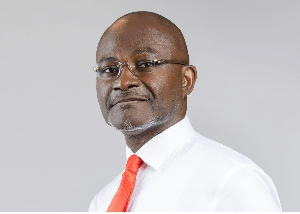
 Kennedy Agyapong is a flagbearer hopeful of NPP
The behavior of Kennedy Agyapong throughout the New Patriotic Party (NPP) nomination campaign in both 2024-25 and 2025-26 epitomizes the characteristics of a politician who feels entitled to the office of the President of Ghana, irrespective of whether he is qualified by any criterion.
Kennedy Agyapong’s campaign to be nominated to represent NPP has been characterized by a drumbeat of insults against people across a broad spectrum of Ghanaian society who have drawn his ire in one way or another.
The victims have run the gamut from his NPP adversaries including Dr Bawumia, Dr Bryan Acheampong, and Dr Adutwum, as well as ordinary citizens who he deems to have wronged him.
In sum, the behavior of Kennedy Agyapong has shown an indisputable lack of self-control, arrogance that is out of control, anger provoked by what he perceives as “unfair treatment” and personal slights against him, whether they are real or imagined. His incendiary remarks about the intellect of women and unproven accusations against Bawumia have not only been bizarre but legendary!
Against the background of the above attributes of Kennedy Agyapong, one can hazard the guess that he exhibits the qualities of a politician who feels entitled to the office of the President of Ghana, based on the characteristics of political entitlement noted below:
What political entitlement means
Political entitlement is the perception that:
Office is a personal reward rather than a public trust.
Power grants special privileges or immunity.
Status justifies preferential treatment, access, or enrichment.
Rules apply differently to leaders than to citizens.
Instead of being inspired by ideology, political entitlement often derives from prolonged exposure to power, status, and being venerated.
Sources of political entitlement
Politicians like Kennedy Agyapong who feel politically entitled exhibit the power and psychological effects noted below:
Obsequiousness and excessive deference strengthen beliefs in superiority.
Long tenure that creates a sense of “ownership” over institutions.
Power increases risk-taking and reduces empathy.
In developing economies like Ghana, entitlement among politicians often becomes a central barrier to institutional reform and development.
Unfortunately, many admirers of this genre of politicians’ mistake (whether unwittingly or willfully) the bravado, arrogance, indignation, and intemperate demeanor of politicians as proxies for confidence, tenacity and resolve.
This cannot be further from the truth. In fact, there are unsavory social impacts of political entitlement that usually include:
Voter apathy and/or disengagement.
Public cynicism and loss of trust.
Normalization of corruption.
Finally, let us all acknowledge Kennedy Agyapong’s behavior for what it really is. Instead of dressing his attitude in the garb of a “disruptor” as Kwasi Kwarteng claimed in a talk-show radio appearance recently, his has repeatedly shown that he is incapable of a political discourse devoid of brutish and unfounded accusations against his adversaries that reflects even basic norms in etiquette and decorum.
In lieu of treating his detractors as “visceral enemies”, it will serve Kennedy Agyapong well if he focuses on policy-based disagreements and provides different options for grappling with the myriad development challenges that confront Ghana.

Copyright © 1994 - 2026 GhanaWeb. All rights reserved.










