



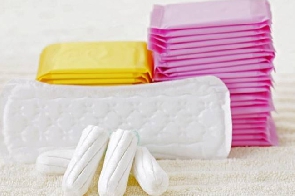
 Providing sanitary pads to schoolgirls is an important social intervention
Providing sanitary pads to schoolgirls is an important social intervention.
It recognizes that menstrual health is directly linked to school attendance, confidence, and educational continuity.
When the government steps in to bridge access gaps, it sends a message that no girl should miss school because of a natural biological process. That objective deserves support.
Yet noble intentions must be matched with fiscal prudence and uncompromising quality standards.
Recent procurement figures warrant careful scrutiny. The reported unit cost of the government-distributed PadSchool product is GH¢44.3 per pack, totaling GH¢264.3 million for six million packs.
A comparable product on the open market, Yazz, retails at approximately GH¢18 per pack. The difference of GH¢26.3 per pack is not marginal.
At a scale of six million units, the total expenditure for PadSchool approaches GH¢297.4 million, compared with an estimated GHS 118.3 million at prevailing market prices.
The gap of roughly GH¢173.6 million raises legitimate public interest questions.
In a constrained fiscal environment, a difference of nearly 174 million cedis must be justified by clear, measurable value.
If higher pricing reflects superior absorbency, longer wear time, safer materials, improved packaging, or integrated distribution logistics, these distinctions must be transparently documented.
Public procurement cannot operate on assumptions. It must be anchored in evidence.
More troubling, however, are reports questioning the quality of the distributed product.
Menstrual hygiene products are not ordinary commodities; they are intimate health items.
Poor-quality pads can have direct health consequences. Low absorbency increases the risk of prolonged moisture exposure, which may contribute to skin irritation, rashes, and discomfort.
Inferior materials can cause allergic reactions or dermatitis, particularly among adolescents whose skin may be sensitive.
Inadequate adhesive backing may lead to leakage, increasing anxiety, stigma, and school absenteeism. In extreme cases, unsanitary or substandard manufacturing conditions may expose users to infection.
For schoolgirls, these risks are not theoretical. Discomfort and embarrassment can disrupt concentration in class. Recurrent irritation may require medical attention.
Fear of leakage may lead some to stay home, undermining the intervention's very objective. When quality is compromised, so is dignity. When dignity is compromised, educational outcomes suffer.
The Minister of Education’s decision to initiate an audit is therefore both appropriate and urgent.
The audit must examine not only financial documentation but also product testing standards, supplier selection processes, and compliance with health and safety regulations.
Independent laboratory verification of product quality should be part of the review. Transparency in these findings is essential to restoring public confidence.
This matter extends beyond accounting. It concerns the stewardship of public funds and the protection of adolescent health.
It also concerns whether procurement systems prioritize cost justification and beneficiary welfare equally and whether policy implementation is guided by rigorous oversight or weakened by opacity.
The objective of menstrual health support remains valid and necessary. However, with nearly 300 million cedis in public resources at stake, accountability is not optional.
If the price is significantly higher, quality must be demonstrably superior. If quality is in doubt, reform is required.
In safeguarding the health of schoolgirls and the integrity of public spending, scrutiny is not antagonism. It is a responsibility.

Copyright © 1994 - 2026 GhanaWeb. All rights reserved.










