



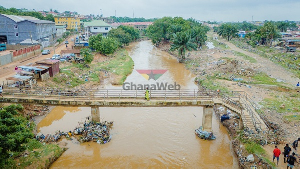
 File photo of the June 29 Accra floods
The devastating floods that continue to affect Accra, Ghana, are a powerful reminder that climate-related disasters are becoming more frequent and more destructive.
Heavy rainfall has repeatedly submerged roads, homes, businesses, and public infrastructure across the city, disrupting daily life and causing significant economic losses. These events highlight the urgent need for better flood preparedness, early warning systems, and resilient infrastructure.
For many residents of Accra, scenes of flooded neighborhoods such as Kaneshie, Odawna, Alajo, and Kasoa have become all too familiar. Rapid urbanization, poor drainage systems, blocked waterways, and increasingly intense rainfall have combined to make flooding a recurring challenge.
While improving drainage infrastructure remains essential, technology can also play an important role in reducing the impact of these disasters.
Artificial intelligence (AI) is emerging as a powerful tool for disaster preparedness. By combining data from weather forecasts, rainfall sensors, water-level monitors, satellite imagery, and Internet of Things (IoT) devices, AI systems can identify flood risks before they become emergencies.
These technologies can help authorities make faster, more informed decisions and issue timely warnings to communities at risk.
Smart grid technology can further strengthen disaster response by monitoring critical energy infrastructure in real time. During severe flooding, intelligent systems can detect threats to electrical substations and power lines, automatically isolate damaged equipment, reroute electricity through safer networks, and prioritize power for hospitals, emergency shelters, and other essential services.
These capabilities can reduce outages, improve public safety, and support faster recovery efforts.
Beyond protecting the power grid, AI-driven technologies can improve coordination among emergency responders, utility companies, weather agencies, and local governments. Access to real-time information enables quicker responses, better resource allocation, and more effective disaster management.
Building resilient infrastructure, however, requires more than technological innovation—it also depends on sustainable financing. Innovative funding mechanisms such as blended finance, which combines public, private, and development capital, can accelerate investments in renewable energy systems, smart grids, and climate-resilient infrastructure.
According to a study by Raymond Ashieyi-Ahorgah, blended finance has become an important strategy for strengthening U.S.–Africa renewable energy partnerships by mobilizing investment for clean energy projects while advancing climate resilience, energy security, and sustainable economic development.
The challenges facing Accra are shared by many cities around the world that are experiencing the effects of climate change and rapid urban growth. Investing in intelligent infrastructure, supported by innovative financing models, can help communities become more resilient by shifting from reacting to disasters after they occur to anticipating and preparing for them in advance.
Technology alone cannot eliminate flooding. However, when combined with improved urban planning, stronger infrastructure, effective public policies, and strategic investment partnerships, artificial intelligence, smart grid technologies, and blended finance can become powerful tools for protecting lives, reducing damage, and building safer, more resilient communities for future generations.

Copyright © 1994 - 2026 GhanaWeb. All rights reserved.










