



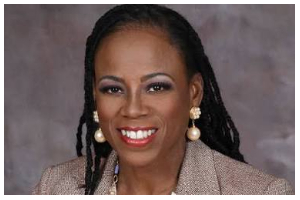
 Carol Ammons is a US legislator from Illinois
For centuries, the ancient rocks of the Pikworo Slave Camp at the Nania community in the Kassena-Nankana West District of the Upper East Region have witnessed deep sorrow, separation and silence.
They have stood as enduring witnesses to one of humanity’s darkest chapters, when millions of Africans were forcibly torn apart from from their families and transported across the Atlantic Ocean to build distant economies under bondage.
The painful memories of those centuries continue to linger in the minds of many people, including Ghanaians in the diaspora.
Yet on Thursday, July 2, 2026, those same grounds became the setting for a profoundly different chapter—one defined not by loss but by return, recognition and healing. On that historic day, a United States legislator from Illinois, Carol Ammons, stood on the sacred landscape of Pikworo Slave Camp in Paga, not as a visitor, but as a daughter returning home after centuries of separation.
Her journey was made possible through modern DNA genealogy under, the African Kinship Reunion (TAKiR) Project, a collaborative initiative involving the University of Illinois Urbana-Champaign and Ghanaian partners, including the University of Cape Coast, which traced her ancestry directly to the Nania community in Paga.
A Sacred Ground Where History Speaks
Nestled among striking granite formations near Ghana’s border with Burkina Faso, Pikworo Slave Camp served as a major inland transit point in the transatlantic slave trade. Enslaved Africans from across northern Ghana and neighbouring territories were held there before being marched southward to coastal forts such as Cape Coast and Elmina.
Unlike the well-known coastal castles, Pikworo tells a quieter but equally haunting story—of punishment rocks, grinding stones, resting grounds, and forced departure routes that carried captives toward an uncertain fate.
For generations, oral traditions in Paga have insisted that the slave trade’s roots extended deep into the north. The DNA-confirmed reunion of Representative Ammons with her ancestral lineage now gives scientific weight to those longstanding accounts.
Speaking at the Family Reunion Durbar, the Vice-Chancellor of the University of Technology and Applied Sciences (UTAS), Professor Albert Luguterah, described the moment as a historical correction.
“Today, history completes a circle,” he said. He added that the findings affirm Pikworo’s place as a critical node in the transatlantic slave trade network.
When Science Meets Ancestral Memory <.b>
For centuries, African communities have preserved identity through oral tradition, naming systems and ancestral memory. While colonial archives often dismissed these records, genetic science is now bridging that gap.
Through DNA analysis, the TAKiR Project is reconnecting descendants of enslaved Africans to their ancestral homes, transforming abstract history into lived identity.
For Representative Ammons, the experience was deeply transformative. She reflected on the centuries-long erasure of African identity through slavery and its enduring consequences for African-descended populations globally.
She also lauded President John Dramani Mahama for his bold advocacy at the United Nations, where he called for reparations for Africa over the historical injustices of slavery and colonial exploitation. She described his intervention as courageous and timely, noting that it had amplified the global voice of people of African descent demanding justice and recognition.
According to her, while financial compensation alone cannot repair historical trauma, global acknowledgment of these injustices is essential to healing and reconciliation.
Homecoming Beyond Ceremony
The Family Reunion Durbar brought together traditional leaders, government officials, academics, diaspora representatives, youth groups and residents from across the Kassena-Nankana area. Traditional drumming and cultural performances filled the air, but beneath the celebration lay deep emotion.
District Chief Executive Stephen Aeke Akurugo welcomed Representative Ammons not as a guest, but as family. “Our customs teach us that home is where one is accepted and embraced without reservation,” he said. “Today, we receive you as a daughter.”
The moment also marked a symbolic honour. Representative Ammons was enskinned as the Peace and Development Queen Mother of the area, a gesture signifying her formal integration into the community and her commitment to supporting development initiatives.
A Voice from the Ghana Tourism Authority
The Upper East Regional Manager of the Ghana Tourism Authority, Mr Joseph Appiagyei, urged communities to embrace visitors seeking ancestral reconnection. He cautioned against harassment of tourists and instead encouraged residents to share their expertise, cultural knowledge and historical narratives with dignity and pride. He stressed that diaspora visitors represent an important bridge between Ghana and the global African family.
Appiagyei appealed to Representative Ammons and other descendants of Africa to become international ambassadors for tourism in Ghana.He further emphasized that transforming Pikworo into a world-class heritage destination would attract investment, create jobs for young people, and position the Upper East Region as a key cultural tourism hub in Africa.
Healing Historical Wounds
Standing before the ancient slave routes, Professor Luguterah described the reunion as “The Dawn After the Longest Night.” He reminded participants that the landscape itself holds memory.“The earth remembers,” he said. “The rocks remember.”
For Ammons, those words reflected a powerful truth: while slavery scattered families across continents, it could not erase identity.
Rewriting Ghana’s Historical Narrative
The event also reinforced growing academic recognition that Ghana’s slave trade history extends beyond coastal castles into inland regions.
The DNA-confirmed lineage strengthens arguments for greater attention to northern Ghana’s role in the transatlantic slave trade. Experts at the durbar called for expanded research, preservation and tourism development to ensure that sites like Pikworo are not forgotten in global historical discourse.
Professor Luguterah proposed deeper collaboration between Ghanaian institutions and universities in the United States, including research exchanges, cultural diplomacy and heritage studies.
He further envisioned the establishment of a Heritage Centre for Research and Healing at Pikworo, combining museum archives, research facilities and educational programmes. Such a centre, he noted, would preserve memory while fostering global understanding of slavery and its consequences.
A Growing Movement of Return
The reunion reflects Ghana’s expanding role in diaspora engagement initiatives such as the Year of Return and Beyond the Return. With the support of DNA genealogy, these initiatives are evolving from symbolic visits into precise reconnections with ancestral communities. For Paga, the impact is profound: a community once known for being part of a tragic historical network is now becoming a site of reunion and healing.
A Future Rooted in Memory
As the ceremony concluded, traditional blessings echoed across the ancient grounds. The gathering symbolised more than remembrance—it represented restoration. Centuries after families were torn apart, one lineage had found its way home.
The reunion of Carol Ammons with her ancestral roots stands as a powerful reminder that while history can wound deeply, it cannot erase identity. The blood remembers. The land remembers. And sometimes, history finds its way back home.
For this writer, whose career spans reporting for the Ghana News Agency (GNA) and the Ghanaian Times before transitioning into academia as a lecturer in the Department of Marketing and Communication at Bolgatanga Technical University, this assignment was more than another news event.
As a development communication scholar, researcher and consultant, witnessing history, science, culture and development converge to reunite a family separated for centuries underscored the transformative power of storytelling—not merely to document events, but to preserve memory, inspire development, promote heritage tourism and strengthen the enduring bonds between Africa and its global diaspora.
Watch bird's-eye view of how illegal construction on waterways is fueling Accra's flood crisis

Copyright © 1994 - 2026 GhanaWeb. All rights reserved.










