



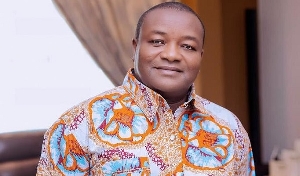
 Dr Alhaji Hassan Ayariga
I have followed with considerable concern recent media reports and television discussions concerning the decision by the government of President John Dramani Mahama, through his Cabinet and Minister for Foreign Affairs, Hon. Samuel Okudzeto Ablakwa, to pursue Ghana’s participation in BRICS.
As a concerned Ghanaian citizen, a politician, and the Founder and Leader of the All People’s Congress (APC), I believe this development raises fundamental questions about our constitutional democracy, national sovereignty, parliamentary authority and the right of the Ghanaian people to participate in decisions affecting the future of our country.
Let me state clearly that I am not necessarily opposed to Ghana establishing strategic economic and diplomatic relationships with BRICS countries.
Indeed, Ghana must explore every legitimate opportunity to strengthen its economy, expand international trade, attract responsible investment, create employment and promote national development.
However, the pursuit of economic opportunities must never become an excuse to undermine constitutional governance, parliamentary oversight and democratic accountability.
1. MR. PRESIDENT, GHANA BELONGS TO GHANAIANS, NOT TO THE PRESIDENT.
Ghana is a constitutional democracy governed by the 1992 Constitution. Article 1(1) clearly establishes that sovereignty resides in the people of Ghana, in whose name and for whose welfare the powers of government are exercised.
This fundamental constitutional principle must guide every major national decision.
My question to President John Dramani Mahama is simple: Who has the authority to determine Ghana’s long-term international economic and geopolitical commitments? Can the President do so without the approval of Parliament and the Ghanaian people?
If the President and his Cabinet believe that joining BRICS is in Ghana’s national interest, why should such an important decision not be subjected to broader national discussion? Why should Parliament, the constitutional representative of the Ghanaian people, not be formally engaged in examining the implications of this proposed relationship?
Why should civil society, political parties, economic institutions, the business community and other national stakeholders not be given an opportunity to contribute? Mr. President, Democracy is not simply about elections every four years.
Democracy is about accountability, transparency, consultation, constitutional responsibility and participation of the sovereign people in the governance of the country.
Fundamental political, economic, legal, and social policies must emanate from the people. The sovereign people of Ghana must make the decisions to be executed or implemented by the arms of government. 2. WHAT DOES ARTICLE 75 OF OUR CONSTITUTION SAY?
Mr. President, I wish to draw your attention to Article 75 of the 1992 Constitution. Article 75(1) empowers the President to execute or cause to be executed treaties, agreements and conventions in the name of Ghana. However, Article 75(2) requires such treaties, agreements and conventions to be ratified by Parliament, either through an Act of Parliament or a resolution supported by more than half of all Members of Parliament, before they become binding.
I acknowledge that the Constitution also gives the executive responsibility for the conduct of foreign policy and empowers Cabinet to assist the President in the performance of his duties. Nevertheless, Cabinet’s authority to formulate policy must not be confused with the constitutional requirements governing binding international agreements.
Mr. President, you must therefore place this matter before Parliament for the deliberations and decision of Parliament and the people. The contents, implications and benefits must be made clear to Ghanaians before membership. Continuity and sustainability of the proposed BRICS relationship are key considerations which cannot be left to the decision of just a party in power.

Copyright © 1994 - 2026 GhanaWeb. All rights reserved.










