



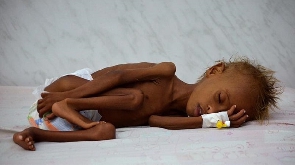
 File photo of a malnourished child
The Nkwanta South Municipality in the Oti Region is grappling with a severe malnutrition and healthcare crisis in the aftermath of recent conflicts.
Even before the outbreak of violence, malnutrition rates among children under five had been rising, and now over 5,000 children are reported to be affected, with many in severe condition.
The influx of families fleeing conflict zones has intensified food shortages and worsened nutritional challenges.
Many displaced households have lost access to essential services, including nutritious food, healthcare, clean water, and sanitation.
According to an Adomonline report dated January 18, 2026, the Municipal Chief Executive, Joseph Antwi Awal, stated that the situation has left families extremely vulnerable.
Malnutrition becomes major killer of children
“Malnutrition severely hampers the growth, development, and survival of children,” Awal stated, adding that over 70% of the local population, mainly farmers, have been affected, leading to widespread food insecurity and extreme poverty as many can no longer cultivate their farms.
In response, the Nkwanta South Municipal Health Directorate, in collaboration with the Ghana Ambulance Service, has screened and weighed over 1,000 children under five to identify those most at risk.
The exercise aims to provide targeted support to the municipality’s most vulnerable children.
Senior Nutrition Officer at Nkwanta Municipal Hospital, Nancy Dogoe, with support from Unicom Chemist, educated mothers on the importance of providing nutritious meals.
Nkwanta conflict: If we continue to play the ostrich, there’ll always be outbreaks – MP
She emphasised that malnutrition should not be attributed to spiritual causes, stressing that it is treatable through proper nutrition.
Children identified during the screening received medications, nutrient supplements such as Tom brown, and other essential nutrients.
Dogoe called on the government and benevolent organisations to provide additional support, including food, drugs, and logistical assistance, to address the rising malnutrition cases.
Emergency Medical Technician Officer Dereck Krontang underscored the importance of public awareness campaigns.
“Our role goes beyond transporting patients; we also act as agents of change, as most emergency cases we encounter are linked to malnutrition,” he said, urging parents to provide adequate nutrition for their children’s healthy growth.
MRA/EB
Meanwhile, watch as Ghanaians respond to Ofori-Atta's detention

Copyright © 1994 - 2026 GhanaWeb. All rights reserved.










