



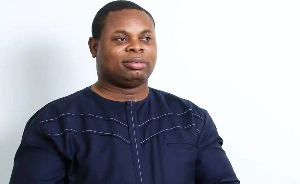
 Franklin Cudjoe is the president of policy think tank IMANI Africa
Public health advocacy groups have welcomed Franklin Cudjoe, Chief Executive Officer of IMANI Africa’s commitment to advocating for Parkinson’s diagnosis and treatment in Ghana.
The groups led by Ghana NCD Alliance and Vision for Accelerated Sustainable Development (VAST-Ghana), civil society organisations (CSOs) made this known in a joint statement copied to the Ghana News Agency.
They said they aligned with Cudjoe’s public revelation of his journey with the disease for the past eight years and the challenges of managing a progressive neurological condition in Ghana.
“These are the high cost of medication and treatment (including care abroad), and the importance of early detection, lifestyle adjustments, and avoiding prolonged exposure to chemicals,” they stated.
The statement noted that Cudjoe’s disclosure brings much-needed attention to the broader gaps in Ghana’s healthcare system, particularly for non-communicable diseases (NCDs).
It explained that “Parkinson’s disease is a chronic, progressive neurological disorder that primarily affects movement, resulting from the degeneration of dopamine-producing neurons in the brain.
“Common symptoms include tremors, muscle stiffness, slowed movement, impaired balance, and speech difficulties, alongside non-motor symptoms such as sleep disorders, depression, and cognitive changes.”
The statement noted that Cudjoe’s shared experience of the disease has transformed public awareness and commended him for his pledge to assist Parkinson’s support groups in Ghana, and the call for the inclusion of the disease in the Ghana Medical Trust Fund (GMTF).
The CSOs warmly welcome Cudjoe into the field of public health and NCD advocates.
They stated, “Your influential voice and lived experience will further strengthen ongoing government-led efforts to improve chronic and neurological care in Ghana.
“These include key initiatives such as expanding specialist training to address the country’s critical shortage of neurologists, reducing financial barriers to long-term care through the National Health Insurance Scheme (NHIS) and the GMTF.”
Others are prioritizing prevention, early detection, and management of NCDs within national health strategies.
The statement said to address Parkinson’s disease, there was also the need for a critical socio-economic policy to subsidize medication, caregiver support programmes, and structured rehabilitation programmes to maintain the financial stability of affected families.
The CSOs called on the government to commit to stronger financing, prevention, and care for chronic conditions, including neurological disorders.
They emphasized that the fight against Parkinson’s disease is inextricably linked to the broader battle against NCDs, and therefore, policies aimed to strictly regulate unhealthy diets, high consumption of sugar and salt, ultra-processed foods, tobacco and alcohol use, air pollution, and promotion of physical activity are urgently needed to protect both cardiovascular and neurological health.
The CSOs called for the immediate establishment of multi-disciplinary care teams that integrate neurologists with allied health professionals, including specialized physiotherapists, occupational therapists, and speech-language pathologists.
“Mental health professionals are also essential to address the high prevalence of non-motor symptoms such as depression, anxiety, and cognitive changes, all of which can profoundly affect the quality of life for people with Parkinson’s,” the statement said.
It urged a concerted national effort to destigmatize neurological conditions, reframing them as manageable chronic diseases rather than inevitable or spiritual afflictions, thereby encouraging earlier presentation and diagnosis.
It stated, “Ghana must act decisively to build a resilient, people-centered healthcare system that addresses specialist shortages, makes essential medications affordable, promotes early intervention, and integrates NCD care into universal health coverage.
“Cudjoe’s leadership can help mobilize communities, policymakers, and partners to close these gaps – for Parkinson’s patients and the millions affected by NCDs nationwide.”
The statement implored individuals, decision-makers, and those in authority to take initiative and act before situations worsen, or they are personally impacted.
“The CSOs stand ready to collaborate with Cudjoe, providing evidence, platforms, and networks to support these efforts and advocacy for better neurological and NCD care. His bravery reminds us that lived experiences can drive transformative change,” they assured.
Watch as commuters speak on recent transportation challenges

Copyright © 1994 - 2026 GhanaWeb. All rights reserved.










