



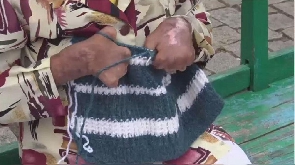
 File photo of a leaper crocheting
The Manhyia Government Hospital in Kumasi has not recorded any leprosy cases for more than five years.
Evelyn Amponsah, the Disease Control Officer at the hospital, attributed this achievement to sustained sensitisation efforts directed at both health workers and the public.
Speaking to the Ghana News Agency (GNA) at the hospital, she noted that management has been unwavering in its commitment to educating all patients about leprosy, its symptoms, and preventive measures.
“This proactive approach has not only contributed to the absence of new cases but has also fostered a better understanding of the disease among community members,” she added.
The GNA visited the facility to gain insight into the leprosy situation as the world observed World Leprosy Day on January 25, 2026. World Leprosy Day is marked annually on the last Sunday of January and serves as an opportunity to celebrate the resilience of individuals affected by leprosy while raising awareness about the disease.
The day also calls for collective action to eradicate the stigma and discrimination often associated with leprosy, which can lead to isolation and suffering for those affected. The theme for World Leprosy Day 2026 is: “Leprosy is curable; the real challenge is stigma.”
Amponsah said the theme serves as a clarion call to enhance public knowledge about leprosy, highlight the challenges faced by affected individuals, and encourage collaborative efforts to eliminate the disease.
She emphasised that stigma is frequently cited by those affected as one of their most significant challenges, making it imperative for society to foster acceptance and understanding.
Amponsah also provided important information about leprosy transmission. While the exact mechanism is not entirely clear, it is believed that droplets containing Mycobacterium leprae are released when an infected person coughs or sneezes, which could then be inhaled by another person.
She clarified that close physical contact is typically necessary for transmission. Casual interactions such as shaking hands, hugging, or sitting next to someone on public transport do not pose a risk.
In light of this, she strongly advised the public to seek immediate medical attention at the hospital if they observe any potential signs of leprosy, including:
Noticeable loss of eyebrows or eyelashes
Persistent sores on the soles of the feet that fail to heal
Deformities accompanied by pain, redness, or burning sensations in the nose, hands, or feet
She stressed that early detection and intervention are key to managing the disease effectively and preventing further complications.

Copyright © 1994 - 2026 GhanaWeb. All rights reserved.










