



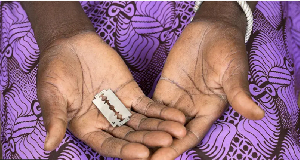
 Perpetrators are still accessible
The Upper West Regional Director of the Department of Gender, Charity Bature, has revealed that perpetrators of Female Genital Mutilation (FGM) are exploiting cross-border family ties and social events such as funerals to secretly transport young girls out of Ghana for the practice.
Speaking on JoyNews’ News Desk on Monday, February 9,2026 Bature said although FGM has been criminalised in Ghana, offenders have adapted by carrying out the act in neighbouring countries where enforcement may be weaker.
“They often claim they are attending funerals or visiting family members across the border, but in reality, they take these girls to have the act performed and return them secretly,” she said.
She explained that authorities cannot point to a specific destination where the practice is carried out, but once the girls cross the border, perpetrators are able to locate individuals who still perform FGM.
“In the past, people known as wanzams practised openly, but the law forced them into hiding. Across the borders, they are still known and accessible,” she noted.
Bature stressed that while Ghana’s laws do not apply outside its borders, offenders can still be prosecuted once they return.
“The laws of Ghana end at our borders, but when these people come back, they can still be held accountable,” she stated.
Old women tear clitoris off at birth – Report
She added that several local mechanisms have been introduced to detect and prevent FGM, including community sensitisation, watchdog committees, and training for teachers and health workers.
“When a child is absent from school for several days or returns with behavioural changes, alarm bells are raised,” she said, adding that health workers also inspect infants brought to health facilities.
According to her, Ghana is working with neighbouring countries through cross-border and inter-regional collaborations to curb the practice, even in areas where FGM is not criminalised.
However, she admitted that porous borders remain a major challenge.
“In some places, it’s just a river separating us. During the dry season, people simply walk across, and funerals are used as cover,” she said.
Bature warned that the continued practice of FGM is undermining national development, gender equality and education.
“It contributes to maternal deaths, deepens poverty and exposes girls to psychological trauma.
"Many are kept out of school for weeks or months to heal, affecting their future,” she added.
She further calling for stronger national and regional leadership commitment to end the practice.
SO/AE
Understanding Ghana's stock market and how to invest | BizTech

Copyright © 1994 - 2026 GhanaWeb. All rights reserved.










