



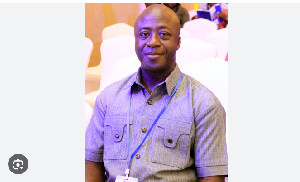
 Dr Gaetan Charles Adangabey, President of the KGA Global Alumni – Ghana Chapter
The Korea Foundation for International Healthcare Global Alumni (KGA) has donated 427 units of blood to the National Blood Service (NBS).
The donation forms part of its annual blood mobilisation exercise to support healthcare delivery in the country.
At a brief ceremony in Accra, the group said the donation formed part of a collaboration between the Alumni and the National Blood Service initiated in 2022.
Dr Gaetan Charles Adangabey, President of the KGA Global Alumni – Ghana Chapter, said the initiative had become the organisation’s flagship programme aimed at contributing to the availability of safe blood for patients nationwide.
He said since the collaboration began, the KGA had mobilised significant quantities of blood annually, starting with 350 units in 2022, 527 units in 2023, 411 units in 2024, offering 427 units in 2026.
Dr Adangabey said the consistency of the donations demonstrated the organisation’s commitment to complementing national efforts to ensure the availability of blood for emergency and routine medical care.
“This is something we have committed to doing every year. With support from the Korea Foundation for International Healthcare, we will continue to mobilise blood to help save lives in Ghana,” he said.
Beyond blood donation, Dr Adangabey indicated that the Alumni undertook a range of health-related interventions across the country, including biomedical engineering support, medical outreaches, and surgical missions, some of which have taken place in correctional facilities.
He explained that the Association comprised of health-sector professionals who trained in Korea and returned home to support Ghana’s health system.
Members include doctors, nurses, biomedical engineers, administrators, and health financing specialists.
Dr Shirley Owusu-Ofori, Chief Executive Officer of the National Blood Service, commended the KGA for its sustained partnership and called on corporate institutions and organisations to emulate the example.
She said the Service relied heavily on voluntary, non-remunerated blood donation and needed continued support to strengthen its capacity to collect and distribute safe blood nationwide.
Dr Owusu-Ofori encouraged corporate bodies to collaborate with the Service in ways aligned with its policies, noting that support could include transport, logistics, donor refreshments, or other essential materials required for blood drive operations.
“Corporate Ghana can assist with whatever their brand can support. We are a social service, and we need almost everything within the social fabric of life to run blood drives effectively,” she said.
She emphasised that the Service did not pay monetary incentives to donors, but provided tokens of appreciation within the framework of its newly developed incentive policy.
The CEO said strengthened partnerships would help build capable collection teams across all 16 regions and ensure adequate blood supply for patients who require life‑saving transfusions.
“Supporting voluntary blood donation contributes to the culture of giving and helps meet the national need for blood. It saves many lives yours and mine included,” she added.
Korle Bu interdicts two doctors, two nurses
TWI NEWS

Copyright © 1994 - 2026 GhanaWeb. All rights reserved.










