



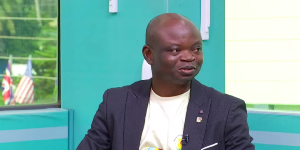
 Dr Bernard Ziem, Programme Manager National TB Control Programme
More than half of Tuberculosis (TB) cases in Ghana remain undetected, despite progress in treatment interventions, the National TB Control Programme of the Ghana Health Service disclosed on Tuesday.
Dr Bernard Ziem, the Programme Manager, said the country detected only about 49.1 per cent of an estimated 44,000 annual TB cases, leaving a significant number of infected persons untreated and continuing transmission within communities.
“This means more than 50 per cent of TB cases are undiagnosed and untreated, and that undermines the gains we have made,” he said at the official launch of the 2026 World TB Day in Accra.
The 2026 commemoration is on the theme: “Yes! We Can End TB! Led by Countries. Powered by People.”
Dr Ziem noted that Ghana’s TB programme continued to perform strongly in treating patients once they were identified, placing the country among those with high treatment success rates.
However, the latest Global Tuberculosis Report 2024 classifies Ghana as a low case detection, high treatment success country, a combination that experts warn is unsustainable.
He explained that while other countries were improving both detection and treatment outcomes, Ghana had made only marginal gains in identifying new cases, citing limited diagnostic tools and uneven distribution of resources as key barriers.
Dr Ziem said the country currently operated below optimal capacity for TB testing, with a shortfall of 32 GeneXpert machines.
He noted that recent investments, including the additional 15 machines, would increase coverage from 87 to 92 per cent, still below the target.
Mobile digital X-ray units, which were critical for community screening, remained scarce, with only 31 units serving 261 districts, covering just eight per cent of national needs, he noted.
He stressed that expanding community-level screening was essential, as evidence shows that taking services to high-risk communities yields more cases than relying solely on facility-based detection.
Dr Ziem also called for stronger private sector and community partnerships, including with the Stop TB Partnership and the TB Voice Network, whose volunteers contribute nearly 10 per cent of detected cases.
However, he noted that the private health sector, which handled about 40 per cent of outpatient care in Ghana, remains underutilised in TB detection.
He urged increased government investment, expanded screening, and deeper collaboration across public and private sectors to close the detection gap.
“With the right resources and collective effort, Ghana can move into the high detection, high success category and end TB,” he said.
Dr Ziem said Ghana aims to meet global TB elimination targets by 2030, but cautioned that finding the “missing cases” would be the decisive factor.
The World Health Organisation (WHO) and other partners pledged continued support towards eliminating TB in the country.
Dr Fiona Braka, the WHO Country Representative, called on the Government to increase domestic investment and accelerate implementation of the newly developed joint TB/HIV National Strategic Plan (2026–2030), in line with commitments made at the UN High-Level Meeting.
She urged partners and donors to help close the critical funding gap and support country-led priorities, while encouraging communities and civil society to sustain efforts in reaching vulnerable populations and ensuring accountability.
At the event, the Deputy Minister of Health, Professor Grace Ayensu-Danquah, handed over 10 digital X-ray and 15 GeneXpert machines to the Ghana Health Service to enhance testing and early detection nationwide.
World Tuberculosis Day, observed on March 24 each year, aims to build public awareness about the global TB epidemic and efforts to eliminate the disease.
Gold Transactions: 'Come and I will open the books' - BoG Governor tells Kofi Bentil

Copyright © 1994 - 2026 GhanaWeb. All rights reserved.










