



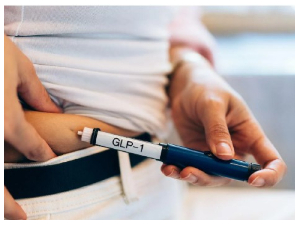
 Those who used GLP-1 medications were 30 per cent less likely to develop breast cancer
New research has found that persons living with breast, lung, bowel and liver cancers who take GLP-1 weight-loss drugs may be significantly less likely to experience the spread of their disease.
The study, involving 12,000 cancer patients, found that those taking the medications were between 38 and 50 per cent less likely to develop stage-four forms of cancer compared with patients who did not use the drugs.
The findings were presented at the annual meeting of the American Society of Clinical Oncology in Chicago, where researchers shared growing evidence suggesting that weight-loss medications could play a role in cancer prevention and treatment.
According to a report by graphic.com.gh on June 3, 2026, the study was led by the Cleveland Clinic and focused on patients with breast, lung, bowel and liver cancers.
Researchers found that people who took the medications had significantly lower chances of their disease progressing to advanced stages, raising hopes that the drugs may support standard cancer care.
The study formed part of a broader series of findings on GLP-1 medications presented at the conference.
Another analysis involving 110,000 women aged between 45 and 80 found that those who used GLP-1 medications were 30 per cent less likely to develop breast cancer than women who did not take the drugs.
The findings were presented by Dr Elizabeth McDonald, a professor of radiology at the University of Pennsylvania and breast radiologist at the Abramson Cancer Center.
Ghana records about 28,000 new cancer cases annually – Expert
“While our study was observational and does not definitively confirm an association between GLP-1 medications and reduced breast cancer incidence, it does add to the growing body of evidence suggesting that it’s worth investigating these weight-loss drugs as potential cancer prevention tools,” she said.
GLP-1s reduce systemic inflammation via different pathways and have other metabolic and epigenetic effects that could inhibit tumour growth.
McDonald believes multiple effects of weight-loss drugs inhibit breast cancer development.
“GLP-1 medications are intriguing from a cancer research perspective because they weren’t designed for cancer therapy, but they do affect many different targets and pathways associated with cancer development, so we’re eager to study them in this context,” Dr McDonald added.
A separate study involving 27,000 breast cancer patients found that adding GLP-1 medications to standard treatment was associated with a 30 per cent reduction in the risk of death.
Commenting on the findings, Dr Marcin Chwistek, director of the supportive oncology and palliative care programme at the Fox Chase Cancer Center, said the medications had long shown promise beyond diabetes treatment.
“GLP-1 receptor agonists have never been just glucose-lowering drugs. Their anti-inflammatory and immune-modulatory properties have long suggested broader effects,” he indicated.
However, experts say more studies are needed to determine whether the benefits stem from weight loss itself or other biological effects of the medications.
Dr Eleonora Teplinsky, head of breast and gynaecologic medical oncology at the Valley Health System, said there was growing evidence of an impact on cancer risk and recurrence, although the exact cause remained unclear.
“I think there is enough data to show there is clearly some impact on either cancer risk or the risk of recurrence, but we haven’t yet defined it exactly,” she said.
“There are also signals that they may help with side-effects. My patients who are on GLP-1s often feel better and it helps with a lot of the side-effects from their hormone blockers. Interest in this area is climbing exponentially. It’s a very hot topic right now and hopefully we can capitalise on that,” she added.
MRA/VPO
Mahama rejects third term push at closed door meeting with NDC elders:
TWI NEWS

Copyright © 1994 - 2026 GhanaWeb. All rights reserved.










