



 The conference provided participating countries with an opportunity to assess progress made
Ghana participated in the 19th Session of the Conference of States Parties (COSP19) to the Convention on the Rights of Persons with Disabilities (CRPD), held at the United Nations Headquarters in New York from June 9 to 11, 2026.
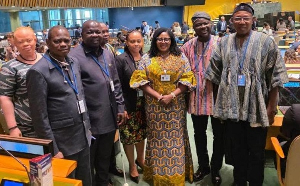
The delegation was led by the Minister for Gender, Children and Social Protection, Dr Agnes Naa Momo Lartey, and included representatives from the Ministry, the National Council on Persons with Disabilities, the Ghana Federation of Disability Organisations, Members of Parliament, and the Parliamentary Caucus on Disability, chaired by Dr Clement Abas Apaak, Deputy Minister for Education.
This year's conference was held under the theme: "CRPD at 20: Celebrating and Consolidating Achievements and Shaping the Next Phase of Implementation in a Changing World."
The conference featured three roundtable discussions focusing on creating a world free from exploitation, violence and abuse; strengthening care and support systems; and enhancing accessible civic engagement, leadership and advocacy.
Ghana's Statement
Dr Lartey delivered Ghana's statement during the General Discussion at the UN General Assembly Hall. In her address, she described the country's two-decade journey since the adoption of the CRPD as "both a moment of reflection and a call to action."
She highlighted several initiatives that demonstrate Ghana's commitment to disability inclusion, including:
* The Persons with Disabilities Bill, 2026, currently before Cabinet, which seeks to align national legislation more closely with the Convention and strengthen enforcement mechanisms.
* An increase in the allocation of the District Assemblies Common Fund from 3% to 5% to support livelihoods, education and healthcare for persons with disabilities.
* Expanded social protection, with more than 147,000 persons with disabilities enrolled in the Livelihood Empowerment Against Poverty (LEAP) programme and linked to the National Health Insurance Scheme under the BIG LEAP initiative.
* The Free Tertiary Education Policy, which covers tuition fees for persons with disabilities in tertiary institutions.
* The integration of the Ghana Accessibility Standard into national building regulations.
* The Digital Acceleration Project, which equips persons with disabilities with digital skills and assistive technologies.
* Cabinet approval for the ratification of the Protocol to the African Charter on the Rights of Persons with Disabilities.
The Minister acknowledged that, despite the progress made, challenges remain, including employment gaps, attitudinal barriers and unequal access to assistive technologies.
"Twenty years after the adoption of the Convention, Ghana's responsibility is not only to protect rights, but to expand opportunities and remove barriers to full participation," she stated.
Participation in Side Events
Beyond the plenary sessions, the Ghanaian delegation actively participated in several side events held on the margins of the conference, underscoring the country's commitment to advancing disability inclusion through multi-stakeholder engagement.
One of the events, titled "Nothing About Us Without Us All: Effective Co-design with People with Disability in All Our Diversity," examined how inclusive participation can be strengthened through effective co-design and representation. Ghana shared its experience in developing disability policies in collaboration with organisations representing persons with disabilities.
At the side event on "Preparedness, Protection and Response for Persons with Disabilities in Times of Emergency," Ghana highlighted ongoing efforts to integrate disability inclusion into national disaster risk reduction and emergency response frameworks.
The delegation also participated in "The Role of the Private Sector in Creating Inclusive Care and Support for Persons with Disabilities," organised by the ILO Global Business and Disability Network. Ghana showcased partnerships with the private sector aimed at improving accessible infrastructure and expanding employment opportunities for persons with disabilities.
Another side event, "Financing Disability Inclusion at Scale: Advancing Domestic Resource Mobilisation and International Cooperation in the CRPD's Next Decade," focused on sustainable financing strategies. Ghana shared its experience with funding disability inclusion through the District Assemblies Common Fund and other social protection initiatives.
The delegation further took part in Civil Society Day activities, engaging with organisations of persons with disabilities from around the world to exchange best practices and strengthen partnerships.
The conference provided participating countries with an opportunity to assess progress made in promoting disability inclusion and to reaffirm their commitment to ensuring equal rights and opportunities for persons with disabilities.

Copyright © 1994 - 2026 GhanaWeb. All rights reserved.










