



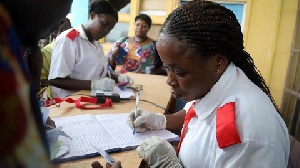
 File photo of a healthcare professional at work
Africa's healthcare financing could face significant disruptions following the United States' withdrawal from the World Health Organization (WHO), according to a recent study published in Health Policy OPEN.
The study found that the US, which contributed about 12–15 per cent of the WHO's total funding between 2022 and 2023, plays a critical role in financing global health programmes.
"In 2020, the US contributed over $400 million to the WHO, accounting for approximately 15% of its total budget. This funding has supported the WHO’s efforts to combat infectious diseases, strengthen health systems, and respond to global health emergencies," it noted.
According to the study, Africa's heavy reliance on external funding leaves the continent "deeply vulnerable to fluctuations in global health funding".
It warned that reduced WHO funding could threaten programmes addressing HIV/AIDS, maternal and child health, tuberculosis and malaria, particularly in low- and middle-income African countries.
It further noted that "the healthcare financial burden will now largely fall on individuals and households", potentially increasing out-of-pocket healthcare spending and limiting access to essential health services.
"A reduction in funding can disproportionately affect vulnerable populations, limiting access to life-saving interventions and impeding progress toward global health equity. US funding has been critical to the WHO’s efforts to distribute COVID-19 vaccines through the COVAX initiative, which aims to ensure equitable access to vaccines worldwide
"Disruptions in funding could jeopardize such initiatives, exacerbating health disparities and hindering progress toward global health goals", the study said.
However, the study suggested that the funding challenge could also encourage the wider adoption of health insurance schemes and push African governments to strengthen domestic healthcare financing and invest in local pharmaceutical production.
"On the bright side, the withdrawal could facilitate the mass adoption of health insurance schemes, especially among the low-income earners in Africa. Many African countries have functioning health insurance programs both at national and community levels but with low active users.
"With the current news of the US withdrawal from the WHO, the health insurance scheme appears to be the safer option for many African households to mitigate the health financing burden, especially during health emergencies. Doubtlessly, the decision challenges the universal health coverage objectives. However, if well managed, it could drive mass adoption and sustainable integration of health insurance coverage in the African healthcare system that makes healthcare services affordable to all,"the study stated.
Ghana rejects $109m US health aid deal over data privacy concerns
It urged countries to reduce their dependence on external aid by increasing domestic health investment, as the US withdrawal from the WHO could significantly disrupt healthcare financing and deepen health disparities across the continent.
The United States formally completed its withdrawal from the World Health Organization (WHO) on January 22, 2026, ending membership for the first time since 1948.
JKB/VPO
The power of Rawlings' legacy lies in its national character - Tsatsu Tsikata

Copyright © 1994 - 2026 GhanaWeb. All rights reserved.










