



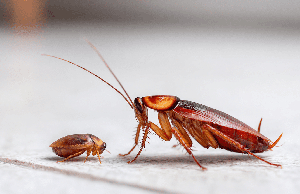
 Cockroaches are attracted to food, moisture and shelter
Finding a cockroach crawling across the floor or kitchen can be enough to send many people reaching for insecticide.
But while the sight of one may immediately raise questions about cleanliness, a cockroach in the house does not necessarily mean the home is dirty.
Cockroaches are attracted to food, moisture and shelter, meaning even a clean and well-maintained home can provide the conditions they need to survive.
The insects play an important role in nature by helping break down organic matter, but indoors they can become a health concern.
According to a report by southernliving.com, cockroaches do not transmit diseases in exactly the same way as mosquitoes or ticks.
However, they can mechanically transfer disease-causing pathogens as they move from drains, sewers, rubbish and other contaminated areas to food or food preparation surfaces.
They may also leave faeces or regurgitated material on surfaces.
Cockroach droppings, shed skins and other debris can also contain allergens that may trigger allergic reactions and contribute to asthma problems in some people.
Food is one of the biggest attractions
Crumbs left on floors, kitchen surfaces or furniture, food scraps, uncovered food, rubbish and even pet food can provide enough nourishment for cockroaches.
Moisture is another major attraction
Dripping taps, leaking pipes, standing water, damp areas and spills can provide cockroaches with the water they need to survive.
This is why kitchens, bathrooms, laundry areas and places around sinks and drains can become attractive hiding spots.
Cockroaches can also enter through surprisingly small openings.
Gaps around windows and doors, cracks in walls and spaces around plumbing and sewer lines can provide entry points into a house.
The area surrounding a home can also contribute to the problem.
Overgrown vegetation, piles of wood and other materials close to the walls can provide shelter for cockroaches and make it easier for them to get indoors.
Cardboard boxes and bags can also harbour cockroaches, particularly when they have been stored for long periods or moved from another location.
This means cockroaches can sometimes enter a home through items brought inside rather than simply crawling in from outdoors.
Second-hand furniture, firewood, bags, clothing and other belongings should therefore be checked before they are brought indoors.
For items that need to be stored for a long time, plastic containers can be preferable to cardboard boxes because they provide fewer hiding places.
Keeping the kitchen clean is also important
Food should be stored in sealed containers and spills and crumbs should be cleaned as soon as possible.
Kitchen cabinets and drawers should be checked regularly for food particles, while surfaces should be wiped down properly.
Dirty dishes should also not be left in the sink overnight where possible because food residue and moisture can attract cockroaches.
Garbage should be emptied regularly, especially when it contains food waste.
Bins should be kept covered and cleaned regularly to prevent food residue from accumulating.
Recycling containers can also contain traces of food and should be rinsed and cleaned where necessary.
Pet owners should avoid leaving pet food out overnight and should clean up pet waste regularly.
Cockroaches are opportunistic feeders and can eat a wide range of materials, making it important to remove as many accessible food sources as possible.
Regular vacuuming can also help
Floors, sofas, chairs and other areas where people eat can accumulate crumbs and food particles that may go unnoticed.
Reducing clutter is another simple measure
Piles of cardboard, papers, old clothes, rags and other materials can create dark, sheltered spaces where cockroaches can hide.
Blocking their entry points is equally important
Gaps around doors and windows should be sealed where possible, while spaces around pipes and other openings should be checked and closed.
Outdoor vegetation should also be kept under control, particularly where branches or plants touch the house.
Wood piles and other materials should be kept away from the walls where possible.
But how can you tell if the problem is bigger than seeing an occasional cockroach?
One obvious sign is repeatedly seeing them around the house.
Cockroaches are generally nocturnal, so seeing them during the day can sometimes indicate a larger infestation because overcrowding may force them out of their usual hiding places.
They typically hide in dark, sheltered areas close to food and water.
Common hiding places include behind or under kitchen cabinets, drawers, sinks, refrigerators and cookers, as well as around baseboards, laundry areas and cracks and crevices.
A torch can help when checking dark or difficult-to-reach areas.
Another warning sign is an unusual musty or oily smell.
You may also come across what appears to be a white or “albino” cockroach.
However, a white cockroach is not necessarily an albino. It may simply have recently shed its outer skin and be waiting for its new exoskeleton to harden.
If cockroaches are repeatedly appearing despite efforts to remove food, water and hiding places, the problem may require more than routine cleaning.
Baits, traps and other appropriate pest-control methods can be used to reduce cockroach populations, while serious infestations may require professional pest control.
The key, however, is not simply to kill the cockroaches that are visible.
Removing their access to food and water, reducing hiding places and sealing possible entry points can make a home less attractive to them in the first place.
Found a snake in your home? Here's what you should do
And seeing a cockroach does not automatically mean a household is unhygienic.
Sometimes, a small gap, a leaking pipe, an uncovered food source or a hidden cardboard box may be all the opportunity the insect needs.
JKB/EB
#TrendingGH: We Even Insult God, How Much More Mahama? – Ghanaians Debate Free Speech & Online Hate

Copyright © 1994 - 2026 GhanaWeb. All rights reserved.










