


 Greater Accra targets a 20 percent annual reduction in maternal deaths by 2030.
The Greater Accra Regional Health Directorate of the Ghana Health Service (GHS) with support from UNFPA has intensified engagements with healthcare professionals and community stakeholders as part of efforts to achieve a target of reducing maternal deaths by 20 per cent annually by 2030.
The engagement, championed and sponsored by the United Nations Population Fund (UNFPA), forms part of collaborative efforts to strengthen maternal and newborn healthcare and accelerate progress towards reducing preventable maternal deaths in the Greater Accra Region.
The Regional Director of Health Services, Dr Robert Amesiya, said the initiative involved coordinated efforts among healthcare workers, families, religious leaders, traditional authorities and other institutions to address the factors contributing to maternal deaths.
He disclosed that Greater Accra recorded the second-highest number of maternal deaths in
the country in 2025, after the Ashanti Region, describing the situation as a serious public health concern requiring urgent attention.
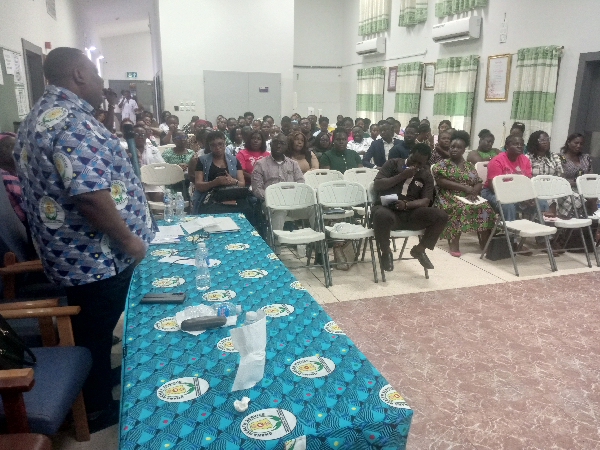
Speaking at a media engagement on Maternal and Perinatal Death Surveillance and Response (MPDSR) in the region at Dodowa on Wednesday, October 21, 2026, Dr Amesiya said reducing maternal deaths required collective responsibility beyond the health sector.
He explained that the directorate was engaging healthcare professionals and other stakeholders to identify challenges, improve service delivery and develop strategies to prevent avoidable deaths.
The region has been divided into six geographical zones for engagements involving healthcare leadership, obstetricians,
paediatricians, midwives, paediatric nurse specialists, public health nurses and other health professionals.
Dr Amesiya said the engagements were intended to examine existing challenges and identify practical solutions to improve maternal and newborn healthcare.
He added that the directorate was also working with traditional authorities, religious leaders, community representatives and other government institutions to strengthen collaboration in addressing maternal mortality.
Early antenatal care
Dr Amesiya urged pregnant women to attend antenatal care early to enable health professionals to identify warning signs and
manage complications before they become life-threatening.
He appealed to husbands and family members to support pregnant women in accessing healthcare throughout pregnancy and childbirth.
He also urged women referred to higher-level health facilities to follow medical advice promptly rather than delay treatment.
The Regional Director called on religious leaders to encourage pregnant women to seek professional medical care, stressing that prayer and other spiritual practices should complement, rather than replace, medical treatment.
He identified bleeding-related complications and hypertension in pregnancy among the leading
causes of maternal deaths, emphasising the importance of timely intervention.
Dr Amesiya also appealed to the public to embrace voluntary blood donation to help provide blood for women experiencing severe bleeding during pregnancy or childbirth.
He urged pregnant women diagnosed with hypertension to adhere to prescribed treatment and attend scheduled antenatal appointments for regular monitoring.
Healthcare facilities urged to strengthen care
A consultant obstetrician gynaecologist and member of the Greater Accra Regional Maternal Health Task Force, Dr Helen Akaba, said healthcare facilities had a critical responsibility to prevent maternal deaths through the prompt
identification and management of complications.
She explained that facilities needed adequately prepared personnel, essential medicines, logistics and other resources to manage emergencies effectively.
Dr Akaba stressed the importance of the use of standard treatment protocols by healthcare workers, particularly when managing conditions such as hypertension in pregnancy.
She noted that staff motivation extended beyond financial incentives to include access to the equipment, medicines and other resources required to provide effective care.
She, however, cautioned against attributing every maternal deaths to negligence without the necessary evidence, emphasising the
importance of examining the circumstances surrounding each case.
Death surveillance and response
The Greater Accra Regional Maternal and Perinatal Health Coordinator, Naa Dedei Korley, said the MPDSR system was intended to ensure that maternal and perinatal deaths were identified, reviewed and used to improve healthcare delivery.
She explained that reviewing such deaths enabled health authorities to identify gaps in care and draw lessons to prevent similar incidents.
Korley urged members of the public to report maternal and perinatal deaths, particularly those occurring outside health facilities, to help
authorities obtain a more complete picture of the problem.
She also called on journalists to report maternal deaths sensitively, focusing on lessons that could improve healthcare delivery rather than turning individual cases into exercises in blame.
She said the media had an important role in raising public awareness, promoting appropriate healthcare-seeking behaviour and encouraging the timely use of maternal and newborn health services.

Copyright © 1994 - 2026 GhanaWeb. All rights reserved.










