


 The proposed redevelopment comes amid broader discussions about the infrastructure needs
The Or Foundation’s annual Obroni Wawu October (OWO) Festival returns for its fifth anniversary this Sunday, October 25, at Untamed Empire. Celebrating secondhand fashion, creativity, sustainability and the people whose livelihoods depend on Ghana’s circular fashion economy, the festival highlights the ingenuity of communities such as Kantamanto, where thousands of people earn a living through the resale, repair, remanufacturing and upcycling of used clothing.
Ahead of the main festival day, The Or Foundation has hosted a series of events celebrating the creativity and leadership of the Kantamanto community, including a Block Party, Beach Cleanup and Kayayei Night.
This year, the festival’s celebration of circular fashion also serves as a call to action: the people who sustain Ghana’s circular economy deserve greater recognition, investment and working conditions that support their health and well-being.
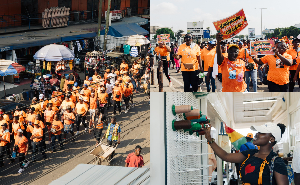
That message was at the heart of the OWO Health Walk on Sunday, October 18, which brought together Kantamanto traders, particularly women, fashion enthusiasts and other members of the public to promote physical fitness, environmental consciousness and the economic potential of textile recycling and upcycling.
Reggie Rockstone, the Ghanaian Hiplife legend and official ambassador for this year’s OWO Festival, used the occasion to call for greater recognition and support for Ghana’s growing upcycling industry. He described the transformation of secondhand clothing into valuable products as an important economic opportunity that deserves national attention.
Speaking to the media after the walk, Rockstone said the event was “intended not only to promote physical fitness but also to foster unity among traders and draw public attention to the significant contribution of the secondhand clothing industry to Ghana’s economy”.
He highlighted The Or Foundation’s work in transforming used clothing, popularly known as *Obroni Wawu*, into valuable products, noting that the initiative demonstrates the considerable opportunities available through recycling and upcycling.
He emphasised that realising this potential requires substantial effort, creativity and technical expertise, alongside greater public recognition and support from the government, industry and other stakeholders. For Rockstone, celebrating the industry’s economic contribution must go hand in hand with investing in the people whose labour makes it possible.
The walk also underscored the importance of health and well-being for the women and men who keep Kantamanto running. Rockstone encouraged traders to engage in regular physical exercise, particularly because their daily activities can involve long hours of sitting, attending to customers, sorting clothes and managing their businesses.
For the Kantamanto Women’s Association, the event provided an opportunity to bring health awareness directly to market women. The Association’s president commended The Or Foundation for facilitating the walk and creating an opportunity for participants to assess their health.
In recognition of Breast Cancer Awareness Month, observed annually in October, the organisers encouraged women to undergo screening and become more conscious of their health. A representative of The Or Foundation added that the team had also worked with Dr. DoGood earlier in the month to conduct breast cancer screenings for more than 220 kayayei, the women and girls who earn a living transporting goods through the market.
The focus on health extended beyond individual well-being to the conditions in which Kantamanto’s traders work. During the walk, Rockstone also expressed concern about recurring flooding in parts of Accra, describing the situation as frightening and a serious threat to lives and property.
His concerns reflect the wider environmental challenges facing communities whose livelihoods depend on markets, streets and public spaces that must remain safe and functional.
Kantamanto Market is widely recognised as one of West Africa’s major centres for secondhand clothing. It supports thousands of traders, retailers, tailors, designers, transport operators and other workers whose activities contribute to employment and economic growth.
However, sustaining this vital economic ecosystem requires more than celebrating its ingenuity. It also requires infrastructure that protects workers, supports circular livelihoods and enables the market to operate safely.
These ambitions were brought into focus at the end of the four-kilometre health walk, which took participants from Kantamanto to a demonstration site showcasing a potential vision for the market’s future.
The 80-stall demonstration site, which represents less than one per cent of Kantamanto Market, was built using repurposed shipping containers. It was designed by Ghanaian architect Nana Ayensua Amonoo of Unapparant on land entrusted to the project by the Accra Metropolitan Assembly.
The demonstration offers a glimpse of how investment in market infrastructure could support both the health of Kantamanto’s community and the future of its circular economy.
The design addresses safety and security concerns through the use of fire-resistant materials and wide aisles that allow carts to transport large bales of materials around the site, eliminating the need for dangerous head-carrying. It also incorporates a solar-powered upcycling centre and waste-management infrastructure.
Its modular design allows for rapid construction, with the aim of reducing concerns about trader displacement during redevelopment.
The site is intended to demonstrate what is possible rather than serve as a complete solution in itself. Over the past 12 months, The Or Foundation has invited several community groups in Kantamanto, including representatives of the Kantamanto Women’s Association, the Kantamanto Upcyclers’ Association and market leaders, to provide feedback on the site.
The Or Foundation estimates that adapting the entire Kantamanto Market to a similar design could cost more than US$70 million. The organisation proposes mobilising the necessary investment through Globally Accountable Extended Producer Responsibility (EPR), government-led special levies, public fundraising and private philanthropic support.
For The Or Foundation, the demonstration site represents a broader opportunity to align Ghana’s economic, environmental and public health ambitions.
The same community that creates value from used clothing needs the infrastructure to do so safely, while the upcycling industry that Rockstone has called on the nation to support needs an environment in which it can grow.
As the OWO Festival celebrates its fifth year, the message is clear: a healthier future for Kantamanto means investing not only in the people who sustain its circular economy but also in the market infrastructure that enables them to thrive.
## About The Or Foundation
The Or Foundation (pronounced “or”) is a not-for-profit organisation working at the intersection of education, environmental justice, and fashion and material development to catalyse a justice-led circular economy grounded in community ecological care.
Based in Accra, Ghana, home to Kantamanto Market—described by the organisation as the world’s largest secondhand clothing market and a leading hub for reuse, repair, upcycling and remanufacturing—The Or Foundation draws on its insights and first-hand knowledge to identify and implement innovative solutions, including recycling initiatives.
The organisation also advocates for meaningful international policy change and brand accountability through initiatives such as Globally Accountable Extended Producer Responsibility (EPR), leads science-backed research initiatives, and provides education and community programming.

Copyright © 1994 - 2026 GhanaWeb. All rights reserved.










