


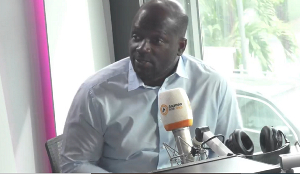
 Teddy Totimeh is a neurosurgeon consultant based in Ghana
Consultant neurosurgeon Teddy Totimeh has warned that stroke has become Ghana’s leading cause of death, urging stronger prevention measures and faster access to treatment to reduce fatalities.
Totimeh said the development was particularly concerning given Ghana’s young population, with half of the country’s population under 20 years old.
Speaking on the Asaase Breakfast Show on Thursday, October 29, 2026, in an interview marking World Stroke Day, observed on October 29, he said the rising burden of stroke required urgent attention from health authorities and the public.
“It’s so important to talk about stroke because this year stroke became the top killer in Ghana,” he said.
Totimeh attributed the high mortality partly to limited access to treatments that have helped improve stroke outcomes in developed countries.
He explained that a stroke occurs when the blood supply to the brain is suddenly interrupted, either because a blood vessel becomes blocked or because it ruptures and bleeds into the brain.
Using a computer as an analogy for the brain, he said the interruption deprives brain cells of the energy they need to function.
He said Ghana appeared to have a roughly equal split between strokes caused by blocked blood vessels, known as ischaemic strokes, and those caused by ruptured vessels, known as haemorrhagic strokes.
This differs from the pattern he described in developed countries, where approximately 80% of strokes are caused by blockages and 20% by bleeding, he said.
Totimeh said haemorrhagic strokes were particularly dangerous, estimating that they resulted in death in about 60% of cases, compared with approximately 20% for ischaemic strokes.
He linked haemorrhagic strokes to hypertension, explaining that prolonged high blood pressure can damage and stiffen the walls of blood vessels, leaving them vulnerable to rupture when pressure rises.
“When the blood pressure goes up, the blood vessel just ruptures, and then blood goes into the brain,” he said.
Totimeh identified physical inactivity as a major risk factor contributing to stroke and hypertension, warning that increasingly sedentary lifestyles were putting more people at risk.
“As we have become more and more sedentary as a society, we are losing the opportunities to clear our blood of the cholesterol,” he said.
He urged Ghanaians to incorporate more movement into their daily routines through walking, running and other forms of physical activity.
However, he said individuals could not address the problem alone, calling for public infrastructure that made exercise and active transport safer and more accessible.
He cited the need for pavements, designated exercise spaces, safer roads for pedestrians and cycling lanes to encourage people to remain physically active.
Totimeh said exercise should become a routine part of everyday life rather than an activity that depended on access to gyms or other paid facilities.
‘Time is brain’
The neurosurgeon urged the public to seek immediate medical attention when someone experiences sudden changes in speech, walking or normal interaction, particularly when symptoms affect one side of the body.
He said such changes could indicate a stroke and should not be dismissed in the hope that they would resolve on their own.
“The anthem is ‘Time is Brain’,” he said, emphasising the importance of acting quickly when symptoms appear.
Totimeh advised that affected people should be taken to a hospital, where doctors could assess their condition, conduct brain imaging where available and determine appropriate treatment.
He said early hospital assessment was essential because stroke treatment depended on identifying what was happening in the brain.
“It is better and safer to be in the hospital when these things happen than to wait and think that it will get better,” he said.
Totimeh called for greater public awareness of stroke symptoms, stronger prevention efforts and improved access to treatment to reduce the number of lives lost to the condition.

Copyright © 1994 - 2026 GhanaWeb. All rights reserved.










