



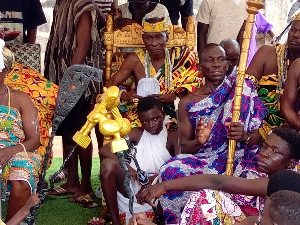
 Nene Bediako Baah Muala III is the Divisional Chief of Dorm in the Manya Krobo Traditional Area
Correspondence from Eastern Region
The Divisional Chief of Dorm in the Manya Krobo Traditional Area of the Eastern Region, Nene Bediako Baah Muala III, has made a passionate call for the restoration of an independent paramountcy for the people of Dorm, emphasising that the division deserves to reclaim its historical status and autonomy within the Krobo traditional structure.
Speaking during a colorful durbar at this year’s Ngmayem Festival at Kpongunor, Nene Bediako Baah Muala III reaffirmed his authority as the legitimate chief of Dorm and expressed dissatisfaction with the current traditional arrangements that place Dorm under a larger paramountcy.
The durbar drew traditional leaders, political figures, clergy, Asafoatseme (warriors), and hundreds of indigenes who gathered to celebrate the heritage and progress of the Manya Krobo people.
In his address, Nene Bediako Baah Muala III declared unequivocally, “Dorm has no Regent. I am the Chief of Dorm — whether you like it or not, Dorm Division has a Divisional Chief, not a Regent, and I am that chief.”
He traced Dorm’s historical significance within the Krobo traditional area, noting that the people of Dorm had held the revered Konor (Paramount Chief) title on fourteen occasions, compared to the Odumase people, who have held it only five times.
On that basis, he argued that Dorm has both the historical legitimacy and the moral right to regain its independent paramountcy.
“We, the people of Dorm, have held the Konor title on fourteen occasions. It is the fifth for the Odumase people, so the planning committee should ensure that we, the people of Dorm, regain our previous glory of holding our separate and independent paramountcy — and not be under any paramountcy,” he urged.
The chief reminded the gathering of a symbolic and binding declaration made decades ago, saying, “We swore an oath 36 years ago not to serve anybody anymore.”
Drawing comparisons with the Asuogyaman District, which he noted has three paramountcies — Anum, Boso, and Akwamu — Nene Bediako Baah Muala III questioned why Manya Krobo, a larger traditional area, continues to have only one paramount chief.
“Asuogyaman is only a district, but it has three paramountcies, including Anum, Boso, and Akwamu. But what do you see when you come to Manya Klo? There’s only one paramount chief. Let’s all help to ensure that Dorm regains its paramountcy,” he appealed, drawing applause from the crowd.
The Ngmayem Festival, which celebrates the new millet harvest and serves as a symbol of unity among the Krobo people, featured rich cultural displays, traditional drumming and dancing, and the display of royal regalia.
Dignitaries from across the traditional area graced the occasion, affirming the festival’s growing prominence as a platform for cultural expression and dialogue on development.
Beyond his political and traditional message, Nene Bediako Baah Muala III also delivered a strong moral appeal to the youth, urging them to uphold discipline, respect, and integrity.
He cautioned against the erosion of cultural values and behaviors that undermine the future of the community.
“You, the youth, are our future, so you have to live well and not the kind of bad character we’re exhibiting today. People who are 80 years old today were once 18. If they had lived their lives carelessly, they wouldn’t have lived long. You should know that all old people were once young — if you live well, you’ll live long,” he said.
The chief also commended the planning committee and the elders for the successful organisation of the festival, noting that the celebration reflected the resilience and unity of the people of Dorm despite historical challenges.
“Congratulations to the planning committee for the well-organised event,” he concluded, as the crowd responded with cheers.
As the call for an independent paramountcy gains renewed momentum, observers say Nene Bediako Baah Muala III’s message at this year’s Ngmayem Festival could reignite discussions about traditional authority, representation, and identity among the Krobo people — potentially reshaping the traditional landscape of Manya Krobo in the years to come

Copyright © 1994 - 2026 GhanaWeb. All rights reserved.










