



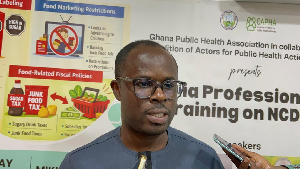
 James Mckeown is the Project Coordinator for the GPHA
The Ghana Public Health Association (GPHA) Project Coordinator, James Mckeown Amoah, has urged the government to implement higher taxes on sugary foods as a key strategy to combat the rising prevalence of non-communicable diseases (NCDs) in the country.
Speaking at a recent training session on NCDs held at the Miklin Hotel, Amoah highlighted the alarming link between unhealthy dietary habits and increasing rates of conditions such as hypertension, diabetes, cancer, and kidney disease.
According to him, NCDs account for approximately 65% of all deaths in Ghana, with over 41% of the population succumbing to these illnesses each year.
He emphasised that sugary foods are a significant contributor to this health crisis and called on the government to take decisive action by introducing a sugar tax, similar to measures successfully implemented in other countries.
"Implementing a tax on sugary foods can reduce consumption and encourage healthier dietary choices among Ghanaians," Amoah stated.
He noted that such fiscal policies have proven effective in lowering rates of obesity and related diseases elsewhere, making a compelling case for adoption in Ghana.
James Mckeown Amoah stressed the importance of immediate action, declaring, "We cannot afford to be complacent. The time to act is now."
He called for a collaborative effort involving healthcare professionals, policymakers, educators, and the media to address this pressing public health issue.
To support the initiative, Amoah proposed several measures aimed at raising public awareness about NCDs and promoting healthier lifestyles. One key recommendation was the introduction of front-of-pack labeling on food products, clearly indicating sugar and salt content, which would empower consumers to make informed choices.
He also advocated for stricter marketing regulations to limit children’s exposure to advertisements promoting unhealthy foods.
"We must protect our children from misleading marketing tactics that encourage poor dietary habits," he asserted.
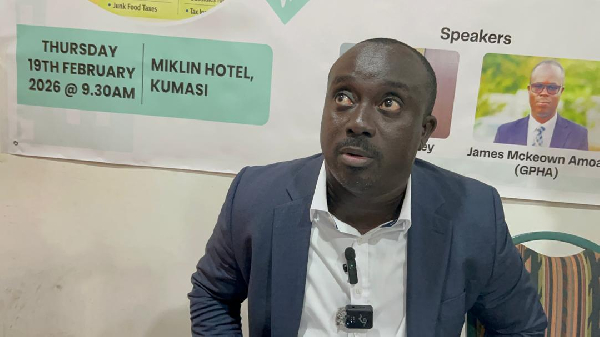
Dr Charles Apprey, a senior lecturer at the Kwame Nkrumah University of Science and Technology, strongly supported Amoah’s call for government intervention to address Ghana’s public health crisis.
He emphasised the urgent need for a sugar tax to discourage excessive consumption of sugary foods, which significantly contribute to obesity, diabetes, and cardiovascular diseases.
Dr Apprey highlighted that combating these health challenges requires the active participation of multiple stakeholders, including the media, which plays a pivotal role in shaping public perception and disseminating critical information about the health risks of unhealthy eating habits.
He urged journalists to embrace their role as public educators by producing content that raises awareness about the dangers of high sugar intake and promotes healthier dietary choices. This could include investigative reporting on the impact of sugary foods, interviews with nutrition experts, and features on successful public health campaigns globally.
Dr Apprey also noted the media’s ability to engage communities through storytelling, making complex health issues more relatable for the average Ghanaian.
By sharing personal stories of individuals affected by NCDs and showcasing community initiatives promoting healthy living, he believes the media can foster a greater sense of urgency and responsibility among the populace.

Copyright © 1994 - 2026 GhanaWeb. All rights reserved.










