



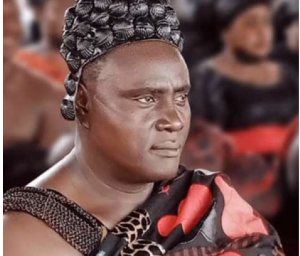
 Second successor in the divine right of kingship to Nzemaland, King Kaku Aka III
The second successor in the divine right of kingship to Nzemaland, King Kaku Aka III, has declared that the British Colonial Administration lacked the moral right to install Paramount Chiefs in the Nzema traditional areas after the capture and execution of his first forebear, King Kaku Aka I, who was the first Paramount Chief and Overlord of the Nzema Kingdom for refusing to sign the Bond of 1844 and resisting attempts to subject his people to the infamous slave trade.
According to him, the caretakers of the Nzema Kingdom “blindly” followed the orders of the British Colonial Administration, to the detriment of history, culture, and tradition, by ascending thrones that did not belong to them for the sake of greed.
King Kaku Aka III asserted that, “If the reparations for slavery that Ghana and the rest of Africa seek to demand from the colonial masters in recent times are anything to go by, then King Kaku Aka I, who refused to sign the Bond of 1844 and opposed the servitude and bondage of his people, committed no crime, and his office must be reinstated.”
This was contained in a statement issued and signed by the spokesperson for King Kaku Aka III, Egya Annor Kwasi, and copied to the media in Accra on May 26, 2027.
Readers may recall that King Kaku Aka I, who founded the Nzema Kotoko Kingdom, became the first Overlord of Nzemaland and earned the accolade, “The Great Nzema King,” in most elementary history books authored by F. K. Buah, former Headmaster of Tema Secondary School (TEMASCO).
King Kaku Aka III, who is the Paramount Chief of the Awiaso Traditional Area, reminded a section of Ghanaians who seem to have forgotten history and tradition that, “Under no circumstances could a political administration forcibly enstool an alien chief who had no allodial right to ascend any throne of a family to which he did not belong.”
He said even the National and Regional Houses of Chiefs did not have the mandate to install any chief because they were not part of the kingmakers of the royal family.
King Kaku Aka III said most of the chieftaincy disputes in traditional areas today emanated from attempts by the colonial masters to usurp the powers of traditional rulers who enjoyed the divine right of kingship, only to replace them with people who were not the rightful heirs to the throne.
King Kaku Aka III noted that even though “a breach of this monarchical absolutism and political legitimacy conferred on the king occurred in Western countries following the English Civil Wars and the French and American revolutions, it was high time sovereign nations maintained their original history, culture, and traditions to avoid the wrath of posterity.”
The traditional ruler said history seemed to have been distorted in recent times because people had “stolen” stools that did not belong to them and were not interested in historical records and antecedents.
“To this end, most of our history books, which taught our children to reconstruct the past to understand the present and pave the way for the future, have been removed from the school curriculum and library shelves.”
King Kaku Aka III therefore appealed to the National House of Chiefs to go through the historical archives to determine who had the legitimate and divine right to be gazetted as Overlord of Nzemaland, in order to put an end to the long-standing disputes and litigations over land and succession cases.

Copyright © 1994 - 2026 GhanaWeb. All rights reserved.










