



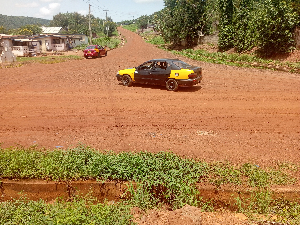
 The Chief says the poor state of the road is denying Abonse tourism and investment opportunities
Traditional authorities in Abonse in the Okere District of the Eastern Region have raised concerns that the deteriorating state of the Aseseeso–Agomeda road is stifling tourism development in the historic community and hampering economic activities, despite the area's rich cultural heritage and agricultural importance.
The Akuapem Abonsehene, Okatakyie Ofori Kantanka III, says the poor condition of the 10.2-kilometre stretch has left Abonse largely inaccessible to tourists, investors, and businesses, depriving the community and the nation of significant economic opportunities.
According to the chief, Abonse, one of Ghana's oldest settlements, is home to a historic slave and gold market that has the potential to attract visitors and contribute to the country's tourism industry.
"Abonse is one of the oldest towns in Ghana. We have a historical slave and gold market here, which presents enormous tourism potential that could benefit government and the local economy. But if the roads are bad, nobody will come," he said.
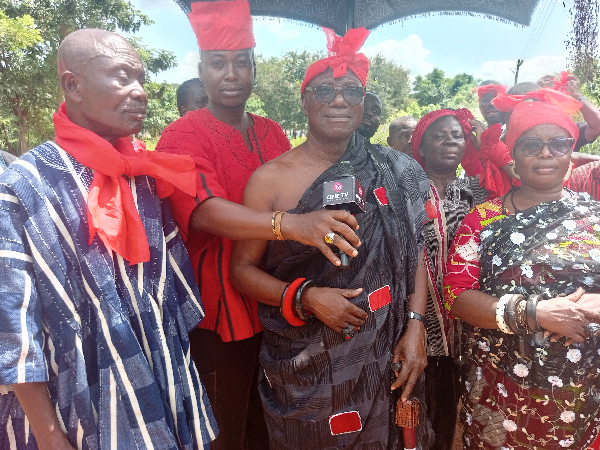
The chief noted that although the community has been allocated a tourism office, it has remained largely non-operational because of accessibility challenges caused by the poor road network.
He explained that the road, which serves as the shortest link between Tema, Ashaiman, and parts of the Eastern Region, was awarded for reconstruction in 2017. However, only a storm drain was constructed before work stalled.
"Subsequent follow-ups with the contractor were met with excuses, while our engagements with political authorities have yielded little. The contract was re-awarded about four years ago, yet nothing substantial has happened. Today, our people are frustrated," he stated.
Beyond tourism, the traditional ruler said the road's condition is severely affecting agriculture, the mainstay of the local economy. He lamented that transport operators and haulage trucks often avoid the area, making it difficult for farmers to move mangoes and other produce to major markets.
"Our farmers are losing income because many trucks refuse to come here to transport their produce. We are making a peaceful appeal to government to intervene and complete the road," he added.
Residents say the road has become increasingly dangerous and difficult to use, particularly during the rainy season.
The Abonse Queen Mother, Nana Abena Kornyor III, also appealed to government authorities to address the situation, stressing that poor road infrastructure continues to discourage investment and slow development in the community.
"This is a mountainous area, and commercial drivers often refuse to come here because of the bad roads and dust. Farmers struggle to transport their produce, while potential investors avoid the area altogether," she said.
She expressed optimism that a good road network would unlock new opportunities for the community, including the establishment of a vibrant market, increased tourism activity, and greater private sector investment.
"We believe that if the road is fixed, development will come. Investors will be attracted to the area, farmers will have easier access to markets, and our tourism potential can finally be realised," the Queen Mother added.
The Assembly Member for the Abonse Electoral Area, Nana Darko Frimpong, said repeated efforts by community leaders and transport unions to secure government intervention have so far proved unsuccessful.
He explained that although the road received some attention during the administration of former President John Agyekum Kufuor, it deteriorated rapidly over the years.
"Attempts were made to reconstruct it in 2017, but the project has since been abandoned. This road is critical because Abonse contributes significantly to food supplies at the Dodowa market and is also a major mango-producing area," he said.
Frimpong called on the Minister for Roads and Highways and the Eastern Regional Minister to prioritise the completion of the project.
He further highlighted the impact of the road on healthcare delivery, noting that transporting pregnant women and critically ill patients to health facilities has become extremely difficult.
"The poor road has increased transportation costs and made access to healthcare challenging for residents," he said.
A commercial driver who plies the Tema-Koforidua route daily described the stretch as a major challenge for motorists.
"I use this road every day because it is the shortest route to Koforidua. The road is in a very bad state, and drivers are often afraid to use it, but we have no choice. Government should urgently rehabilitate it," he said.
The traditional authorities are urging government to treat the completion of the Aseseeso–Agomeda road as a priority, arguing that the project holds the key to unlocking tourism, agriculture, and broader economic growth in Abonse and neighbouring communities.

Copyright © 1994 - 2026 GhanaWeb. All rights reserved.










