



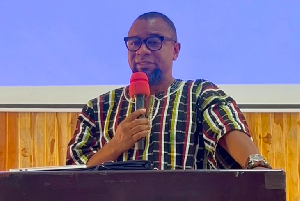
 Dr Daniel Norris Bekoe, KNUST PRO
The University Relations Officer of the Kwame Nkrumah University of Science and Technology (KNUST), Kumasi, Dr Daniel Norris Bekoe, has urged tertiary students to develop strong communication skills, embrace digital technologies responsibly, and build credible personal brands to position themselves for academic excellence, leadership, entrepreneurship, and professional success in the digital age.
He made the call during the 2026 PR Summit organised by the Students’ Representative Council (SRC) on Saturday, June 27, 2026, at the KNUST Law Faculty Auditorium.
Delivering a presentation on the theme “Communicating for Impact in the Digital Age: Strategies for Student Success, Leadership and Professional Excellence,” Dr Bekoe said communication has become one of the most critical competencies of the 21st century, shaped by rapid advances in digital technologies, artificial intelligence, and social media.
He noted that while digital tools have made communication faster and more accessible, they have also created challenges such as misinformation, distraction, and information overload. According to him, the true value of communication is not measured by likes or followers, but by its ability to influence behaviour, inspire action, build trust, and drive meaningful change.
“The true measure of communication is not popularity metrics, but its impact—its ability to inspire action, build trust, and solve problems,” he said.
Dr. Bekoe explained that communication has evolved from traditional one-way media such as newspapers, radio, and television into an interactive, participatory ecosystem powered by digital platforms, giving students unprecedented opportunities to shape global conversations.
He stressed that effective communication enhances academic performance by strengthening students’ research, writing, presentation, and collaboration skills. He further noted that leadership is fundamentally rooted in communication, requiring the ability to articulate vision, inspire others, resolve conflicts, and build consensus.
On employability, Dr Bekoe said communication remains one of the most sought-after skills by employers, adding that graduates who communicate effectively are better positioned to succeed in interviews, report writing, negotiations, and team leadership.
He also highlighted entrepreneurship, explaining that even the most innovative ideas require strong communication to attract customers, investors, and stakeholders.
Dr Bekoe encouraged students to consciously manage their digital footprints by maintaining professionalism on social media, sharing valuable content, and showcasing achievements.
He warned that employers and scholarship bodies increasingly assess candidates based on their online presence, describing digital reputation as “the 21st-century curriculum vitae.”
He also emphasised the importance of digital storytelling and visual communication, urging students to use multimedia tools such as videos, podcasts, infographics, and photography to make their messages more engaging and effective.
The KNUST URO expressed concern about the rising spread of misinformation and disinformation online, urging students to verify information before sharing it.
He advised them to rely on credible sources, practice fact-checking, and promote media literacy to protect their credibility and public trust.
On Artificial Intelligence (AI), he acknowledged its growing role in education and communication, particularly in content creation, translation, and data analysis. However, he cautioned students to uphold ethical standards and maintain academic integrity.
“AI can support communication, but it cannot replace human creativity, empathy, and ethical judgement,” he noted.
Dr Bekoe stressed that ethical communication is the foundation of trust and credibility, urging students to avoid plagiarism, cyberbullying, hate speech, manipulation, and privacy violations.
He identified key future skills including digital literacy, media literacy, AI literacy, emotional intelligence, teamwork, public speaking, critical thinking, and problem-solving.
As practical steps, he encouraged students to read widely, practise public speaking, build professional online profiles, develop content creation skills, think before posting on social media, and embrace lifelong learning.
Concluding his presentation, Dr Bekoe reiterated that communication is not just an academic requirement but a lifelong asset that shapes leadership, employability, entrepreneurship, and national development.
He urged students to use digital platforms responsibly to build trust, inspire positive action, and contribute meaningfully to society.
Gunmen open fire on Sarah Adwoa Safo's vehicle - Reports
Inside the AI revolution that could save lives on Ghana's roads
'The wheels of justice will turn' - Haruna Iddrisu tells Ahmed Suale's family

Copyright © 1994 - 2026 GhanaWeb. All rights reserved.










